
How to Run TRT Without Losing Your Hair (Evidence-Based Guide)

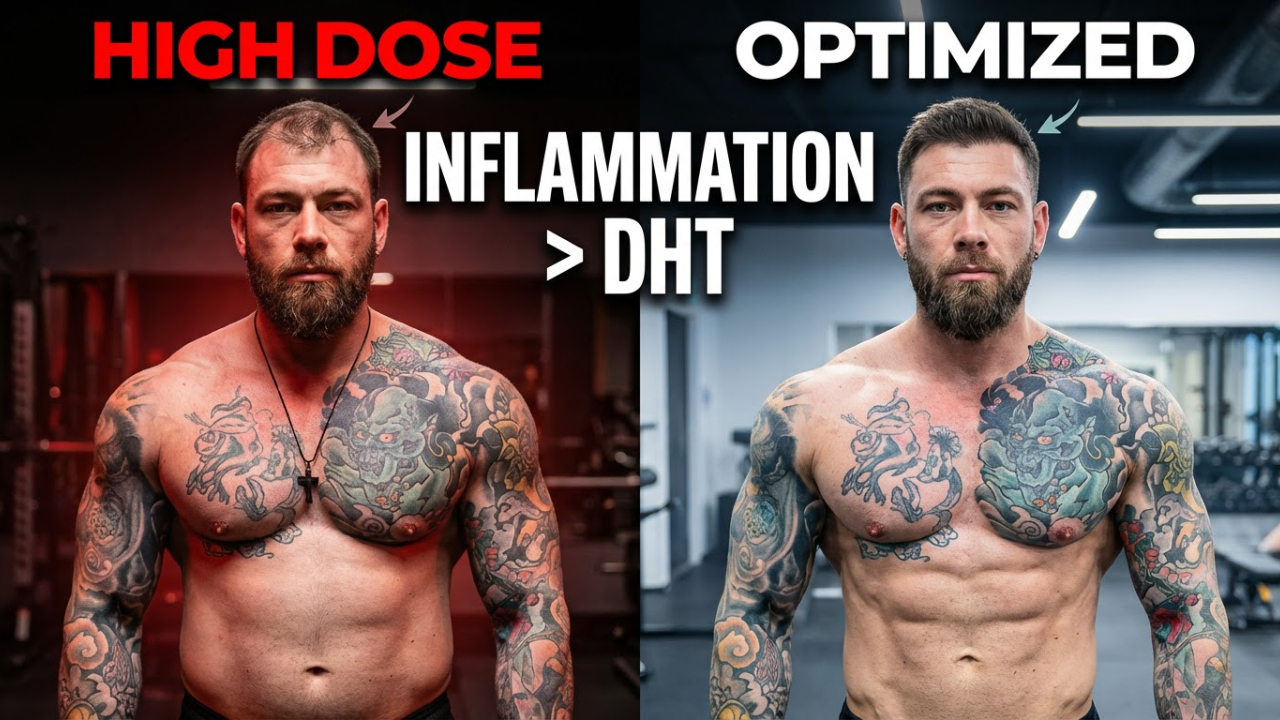
Why Most Men Lose Hair on TRT
Many men believe they must make a brutal choice:
Either keep your hair — or build muscle on TRT.
For years this belief has dominated bodybuilding forums, Reddit discussions, and even medical conversations.
The logic seems simple.
If testosterone accelerates male pattern baldness, then adding more testosterone should make hair loss worse.
And in many cases… it does.
But the reality is more nuanced.
Over the past six months I transformed my physique while using TRT and Retatrutide, dropping body fat and building muscle — while maintaining and even improving my hair.
In this article, I’ll explain:
• why TRT often accelerates hair loss
• the hormonal mechanisms involved
• how lifestyle and metabolic health influence hair follicles
• and the general strategies that can allow some men to run TRT while protecting their hair.
Watch the Full Video
The video shows the full transformation and explains the concepts visually.
Below we will go deeper into the science and strategy behind it.
Why TRT Can Accelerate Hair Loss
Testosterone Replacement Therapy (TRT) is intended to restore normal testosterone levels in men with clinically low testosterone.
However, many clinics prescribe doses such as:
200–250 mg of testosterone enanthate per week
For some men this pushes hormone levels well above natural physiology.
This becomes relevant because testosterone can convert into a more potent androgen called:
Dihydrotestosterone (DHT)
The conversion occurs via the enzyme 5-alpha reductase (5AR).
The Hair Loss Mechanism
The simplified pathway looks like this:
Testosterone → 5-alpha reductase → DHT
DHT binds strongly to androgen receptors in hair follicles.
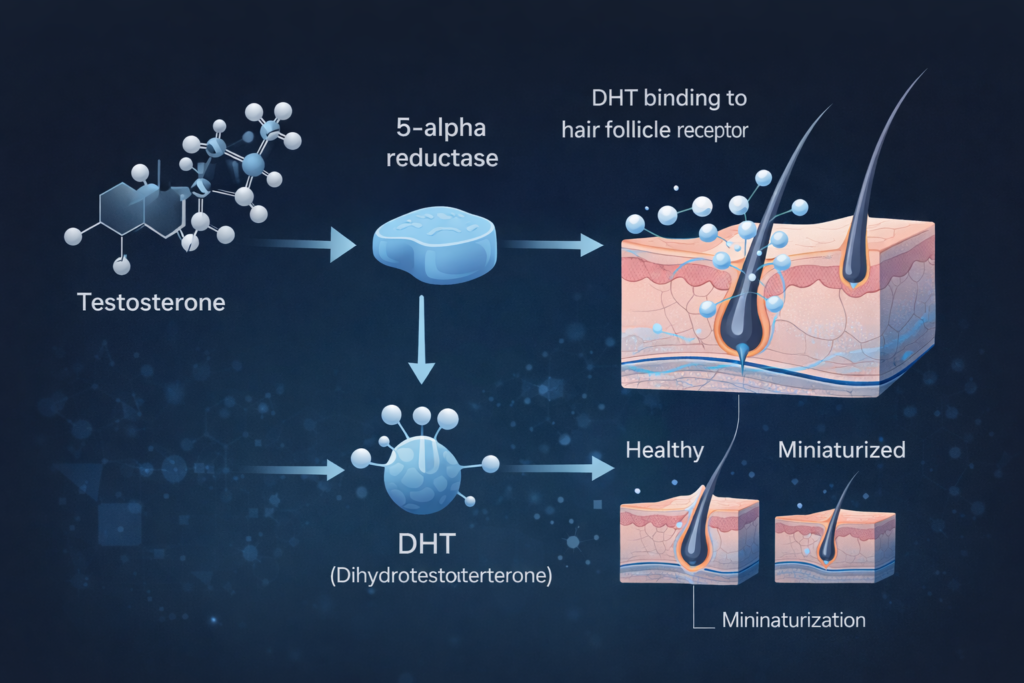
In genetically susceptible individuals, this can trigger a process known as:
follicular miniaturization
Over time:
• hair shafts become thinner
• growth cycles shorten
• follicles eventually stop producing visible hair
This process is known as androgenetic alopecia (male pattern baldness).
Several studies have confirmed the central role of DHT in hair loss.
For example, men with genetic 5-alpha reductase deficiency do not develop male pattern baldness despite having normal testosterone levels.
Why High-Dose Steroid Use Often Destroys Hairlines
The relationship becomes more dramatic when men run supraphysiological steroid cycles.
Many bodybuilding protocols include:
• 500 mg – 1,000 mg testosterone
• highly androgenic compounds (trenbolone, masteron, etc.)
These drugs drastically increase androgen signaling.
For individuals genetically prone to hair loss, this can accelerate balding rapidly.
This was exactly the path I took earlier in my fitness journey.
Like many people chasing size, I experimented with extremely high doses — and the result was predictable:
my hairline paid the price.
Eventually I even traveled to Turkey for a hair transplant.
But after that experience, I changed my approach completely.
The Key Insight: Dose Matters
One of the biggest misconceptions in bodybuilding is that large steroid doses are required to build an impressive physique.
In reality, the difference between physiological TRT and extreme steroid abuse is enormous.
In my current protocol I use approximately:
120 mg of actual testosterone per week
(after accounting for ester weight in testosterone enanthate)
This is a moderate medical TRT dose, not a bodybuilding cycle.
At this level:
• testosterone remains anabolic
• muscle gain and fat loss are possible
• androgenic side effects become easier to manage.
In other words:
smart dosing dramatically reduces risk.
The Metabolic Factor Most People Ignore
Hormones are only one piece of the puzzle.
The metabolic environment of the body also affects hair health.
Over the past six months I reduced body fat significantly while improving my physique.
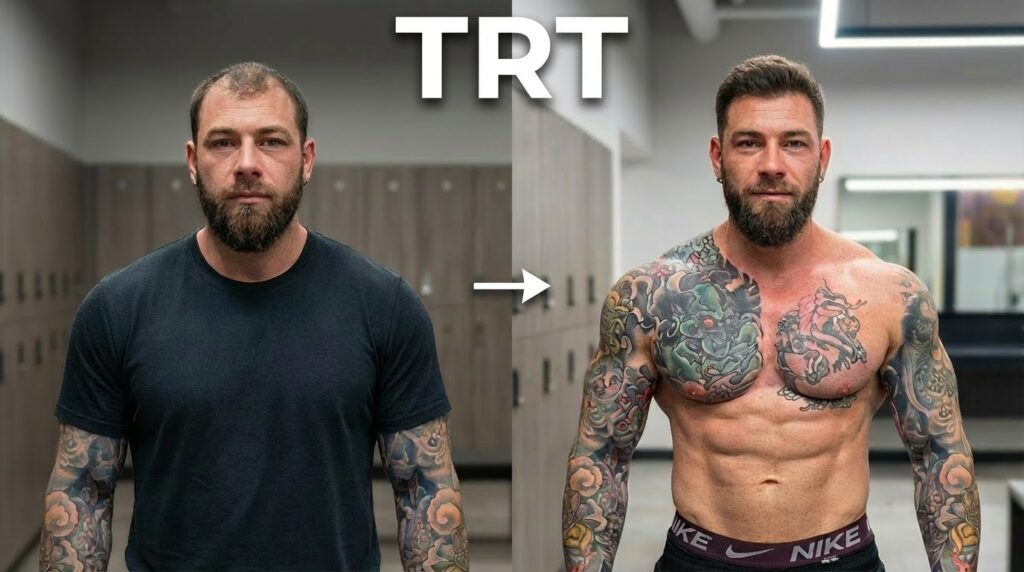
A major tool in that process was Retatrutide, used at roughly 2 mg per week.
Retatrutide is currently being studied as a triple agonist peptide affecting:
• GLP-1 receptors
• GIP receptors
• glucagon receptors
These pathways influence:
• appetite regulation
• insulin sensitivity
• fat metabolism
By improving metabolic health and reducing visceral fat, systemic inflammation can decrease significantly.
Why Inflammation May Affect Hair Follicles
Chronic inflammation is increasingly recognized as a contributor to many health conditions.
Emerging research suggests that inflammatory signaling may also negatively affect hair follicles.
Poor metabolic health is associated with:
• higher inflammatory cytokines
• insulin resistance
• oxidative stress
When body composition improves and inflammation decreases, the environment surrounding hair follicles may also improve.
While this does not override genetics, it may influence the rate of follicle deterioration.
Local Strategies to Protect Hair on TRT
Even with optimized hormone levels and metabolic health, androgen exposure at the scalp remains a key factor.
Several therapeutic approaches target this process.
1. Reducing DHT Production
Medications such as finasteride and dutasteride inhibit the 5-alpha reductase enzyme.
This reduces the conversion of testosterone into DHT.
Clinical trials have shown that:
• finasteride can reduce scalp DHT by roughly 60–70%
• dutasteride can reduce DHT even further.
These medications are widely used treatments for androgenetic alopecia.
2. Blocking Androgen Receptors in the Scalp
Another strategy involves androgen receptor antagonists.
These compounds aim to reduce the ability of androgens to bind to follicle receptors.
Examples sometimes discussed in research communities include:
• RU58841
• pyrilutamide (KX-826)
• clascoterone
Rather than lowering hormones systemically, these approaches aim to protect the follicle locally.
You can think of them as reducing how much androgen signaling reaches the follicle.
3. Mechanical Stimulation (Microneedling)
Hair loss is not purely hormonal.
Advanced hair loss can involve:
• scalp fibrosis
• reduced blood flow
• impaired follicle environment
Mechanical stimulation techniques like microneedling aim to improve the scalp environment.
These techniques may:
• stimulate growth factors
• improve local circulation
• enhance topical absorption.
Many people use devices such as:
• dermarollers
• dermapens
• automated microneedling tools.
Where to Get RU58841
One compound often discussed in hair-loss research communities for protecting hair follicles from androgen activity is RU58841.
RU58841 is a topical androgen receptor antagonist, meaning it works locally at the scalp to reduce the ability of androgens like DHT and testosterone to bind to hair follicle receptors.
Unlike systemic medications such as Finasteride or Dutasteride, RU58841 is designed to act directly at the follicle level, which is why many people include it as part of a broader hair-loss prevention protocol.
Because RU58841 is typically sold for research purposes, sourcing a reliable supplier is important.
One supplier frequently used in the hair-loss community is Anagen Inc, which provides laboratory-grade research compounds.
You can find their RU58841 solution here:
RU58841 Solution (50 ml)
If you decide to purchase from them, you can use the discount code:
BLUEPRINT – For 10% Discount
(Disclosure: the link above is an affiliate link that helps support the research and educational content on this site.)
The Real Lesson: You Don’t Need Extreme Steroid Use
One of the biggest messages I want men to understand is this:
You do not need extreme drug protocols to build an impressive physique.
My current training routine is relatively simple:
• training 3 times per week
• roughly 75–90 minutes per session
Combined with moderate TRT and improved metabolic health, this was enough to:
• build muscle
• reduce body fat
• maintain my hair.
The goal should never be destroying your health just to chase muscle.
Instead, the objective is optimization.
Looking good, feeling good, and maintaining long-term health.
Can You Really Keep Your Hair on TRT?
There is no universal guarantee.
Hair loss depends heavily on genetics and individual sensitivity to androgens.
However, several factors can influence outcomes:
• hormone dosing
• metabolic health
• inflammation levels
• preventative hair treatments.
With a strategic approach, many men can significantly reduce the risk of accelerated hair loss.
The Full Hair Loss Protocol (Coming Next)
In this article we covered the general principles.
But the full protocol includes:
• the exact compounds used
• dosage strategies
• mechanical treatments
• scalp protection methods.
I will break down the entire system step-by-step in the next video.
If you want to see exactly how I maintain my hair while running TRT and improving my physique, make sure to watch the upcoming 2026 Hair Loss Protocol video on the channel.
Scientific References
Kaufman KD. Finasteride in the treatment of men with androgenetic alopecia.
J Am Acad Dermatol. 1998.
Olsen EA et al. Dutasteride vs finasteride in male androgenetic alopecia.
J Am Acad Dermatol. 2006.
Randall VA. Androgens and hair growth.
Dermatologic Therapy. 2008.
Get my free hair-loss protocol
The exact evidence-based routine I actually use and recommend: what works, in what order, with no hype. Enter your email on the next page and I’ll send it straight to you.
Send me the free protocol →