
Iron, Ferritin, Vitamin D, Zinc: Nutrient Deficiency and Hair Loss
Which nutrient deficiencies actually cause hair loss versus which are correlation noise. Iron / ferritin matters most. Biotin is overhyped. The bloodwork panel that answers the question.

Nutrient deficiency causes a specific kind of hair loss – not the patterned thinning that defines male androgenetic alopecia, but a diffuse shedding that responds to repletion. The mistake most men make is buying the supplement before they have the bloodwork. The right move is the opposite: test, identify what is actually low, correct it, and only then judge whether nutrient status is the lever that matters for your hair.
Quick answer: a few deficiencies actually cause hair loss; most are correlation noise
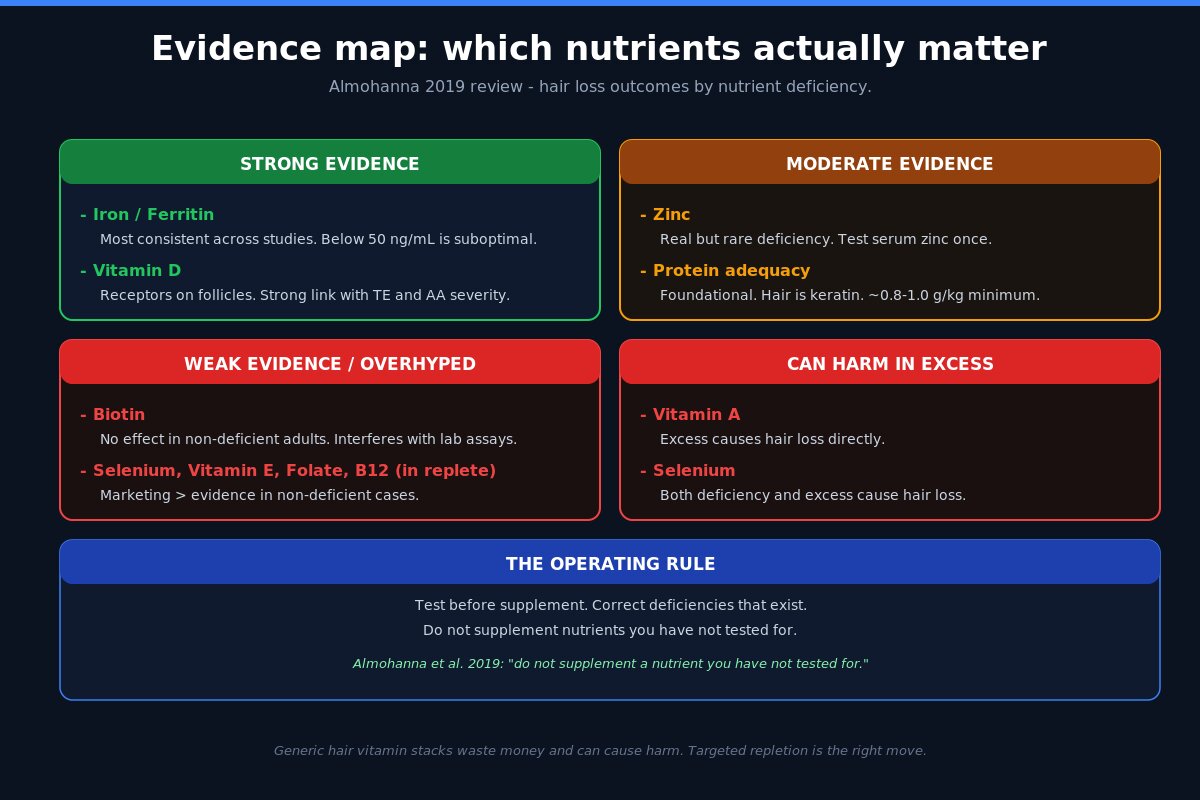
The deficiency-hair-loss literature is uneven. Iron deficiency (low ferritin) is the most consistent finding across studies in shedding patients (Trost et al., 2006; Rasheed et al., 2013). Vitamin D and zinc show up frequently but with weaker causal evidence. Biotin is the most overhyped: deficiency exists but is rare in normal-eating adults, and supplementing in already-replete people produces no benefit (Almohanna et al., 2019). The right approach is targeted bloodwork before any supplement.
For androgenetic alopecia specifically, nutrient repletion is supportive, not curative. AGA is genetic and hormonal; correcting low ferritin will not stop a Norwood-3 progression. But low ferritin layered on top of AGA produces a worse trajectory than AGA alone, and that part is correctable.
What the literature actually shows
Almohanna et al. (2019) reviewed the role of vitamins and minerals in hair loss across multiple deficiency states. The strongest signals were for iron, vitamin D, and zinc. Biotin, beta-carotene, and several others had weaker or context-dependent associations. The review’s most useful conclusion: do not supplement a nutrient you have not tested for.
Trost et al. (2006) examined ferritin levels in women with hair loss and found that low ferritin was significantly more common in shedding cases than controls. The study did not establish a causal threshold but supported the working clinical assumption that ferritin below 30-40 ng/mL is suboptimal for hair purposes.
Rasheed et al. (2013) examined vitamin D and serum ferritin in women with female pattern hair loss and telogen effluvium. Both were lower in cases than controls. The data is correlational, but the consistency across multiple studies pushes the working assumption that these two are real factors.
Several other commonly cited “hair loss vitamins” – vitamin E, selenium, biotin, vitamin A – either have weaker evidence or carry risks at high doses (vitamin A toxicity can itself cause hair loss). The literature does not support a generic “hair growth vitamin stack.”
Iron and ferritin: the most important deficiency
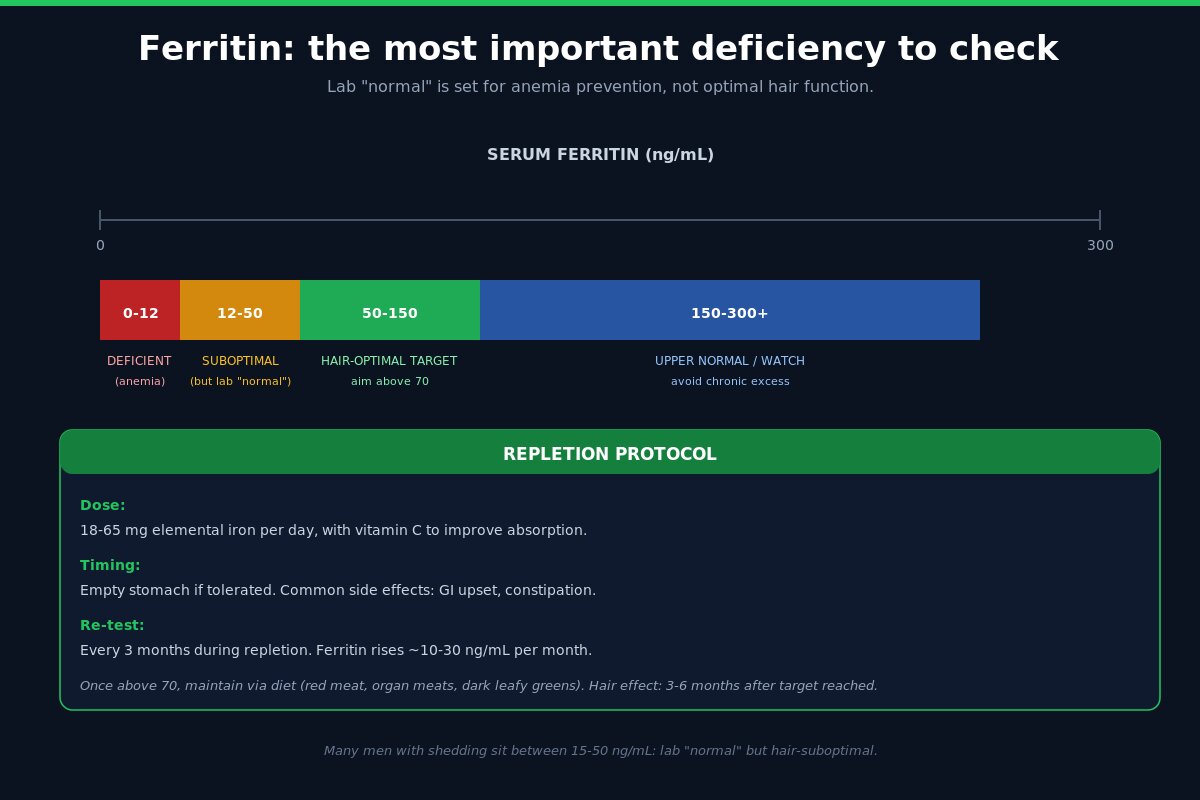
Iron is the most consistent and most important deficiency to look for in a hair loss workup. The marker to check is ferritin (a stored-iron protein), not just hemoglobin or serum iron. Ferritin captures iron stores; hemoglobin and serum iron miss the early-deficiency state where stores are depleted before circulating iron drops.
For hair purposes, ferritin in the 50-70 ng/mL range or above is a reasonable target. Lab “normal” ranges typically start at 12-15 ng/mL, but that lower bound is set for preventing anemia, not for optimal hair growth. Many men with ferritin between 15 and 50 are in the lab “normal” range yet experience hair shedding because iron stores are insufficient for optimal follicle function.
Repletion: iron supplementation taken with vitamin C improves absorption. Common doses are 18-65 mg elemental iron per day, ideally on an empty stomach if tolerated. Side effects include constipation and GI upset. Re-test ferritin every 3 months during repletion. Once above 70, maintain through diet (red meat, organ meats, dark leafy greens) rather than indefinite supplementation – chronically high iron has its own risks.
Important caveat: men, unlike menstruating women, are at lower baseline risk for iron deficiency. If you are a healthy adult man with normal diet and no GI issues, iron deficiency is less likely to be your primary issue. Still worth testing once.
Vitamin D: real but contested
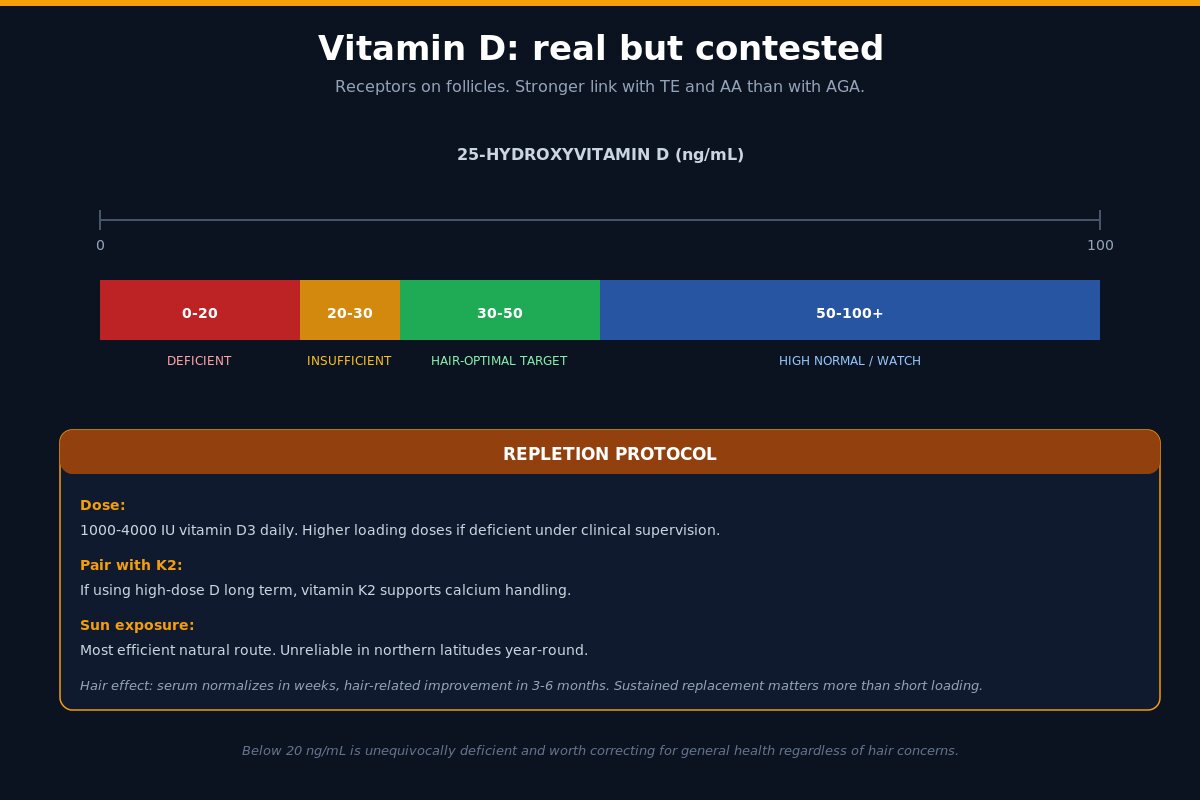
Vitamin D receptors are present on hair follicles, and several papers have linked low vitamin D to alopecia areata and to telogen effluvium severity. The evidence for AGA specifically is weaker. The signal is that vitamin D deficiency does not cause AGA, but severe deficiency may worsen overall hair quality and slow recovery from shedding episodes.
Test 25-hydroxyvitamin D. Optimal range for hair purposes is roughly 30-50 ng/mL (75-125 nmol/L). Below 20 ng/mL is unequivocally deficient and should be addressed for general health reasons regardless of hair concerns.
Repletion: 1000-4000 IU daily of vitamin D3 is the standard range. Higher loading doses are used in deficiency under clinical supervision. Combine with vitamin K2 if taking high doses long term. Sun exposure is the most efficient natural route but is unreliable in northern latitudes year-round.
Zinc: relevant but less critical than iron
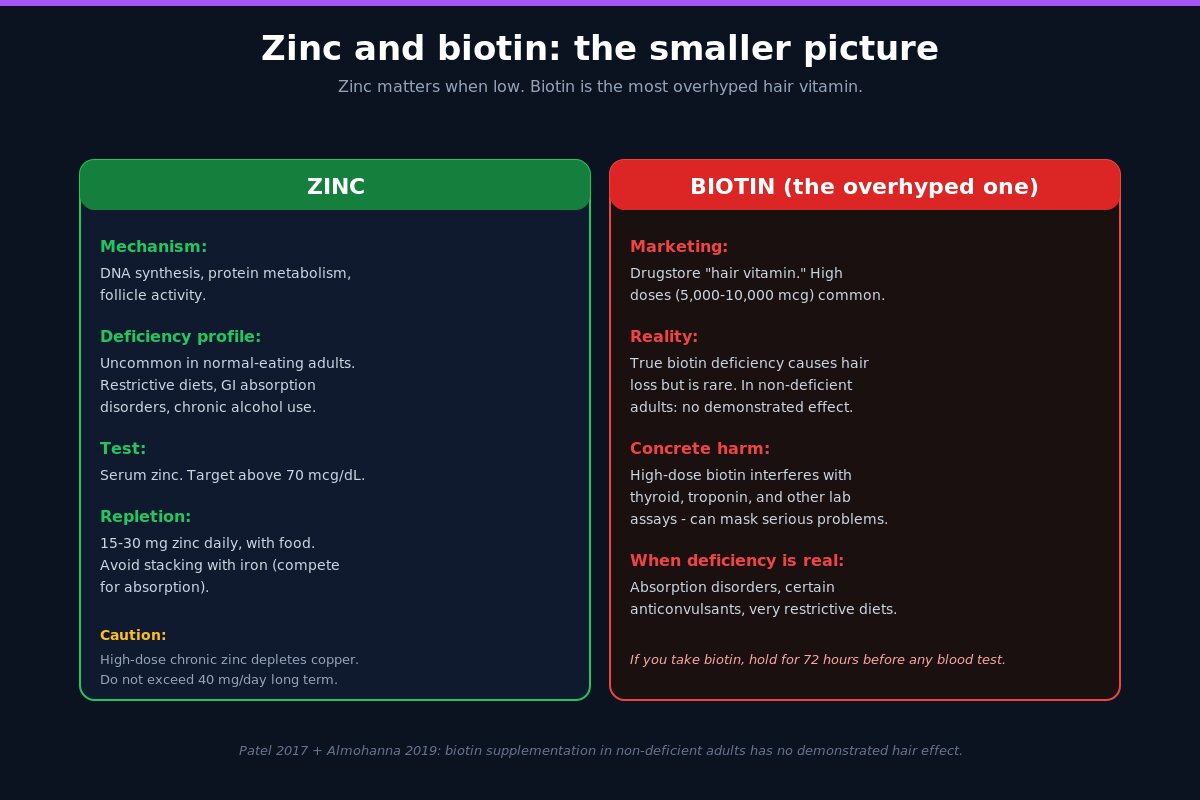
Zinc is involved in DNA synthesis and protein metabolism, both relevant to hair follicle activity. Zinc deficiency causes a specific type of hair loss (telogen effluvium with associated skin and immune changes), but isolated zinc deficiency is uncommon in normal-eating adults. It shows up more often in restrictive diets, GI absorption disorders, or chronic alcohol use.
Test serum zinc. The reference range is roughly 70-120 mcg/dL. Below 70 is deficient. Repletion: 15-30 mg zinc daily, taken with food to reduce nausea. Avoid stacking high-dose zinc with iron (they compete for absorption); dose at different times if both are needed.
Caution: chronic high-dose zinc supplementation depletes copper and can cause its own problems. Do not exceed 40 mg/day long term without monitoring.
Biotin: the most overhyped hair vitamin
Biotin (vitamin B7) is the canonical “hair vitamin” sold in every drugstore. The actual evidence for supplementation in normally fed adults is weak. True biotin deficiency does cause hair loss, but it is uncommon – it shows up in people with absorption disorders, on certain anticonvulsant medications, or with extremely restrictive diets. Almohanna et al. (2019) and Patel et al. (2017) both note that biotin supplementation in non-deficient people has no demonstrated effect on hair.
Worse, high-dose biotin (often 5,000-10,000 mcg/day in hair supplements) interferes with several common lab assays – thyroid function, troponin (heart attack diagnostic), and others. Disclose biotin use to your clinician before any blood work.
The bottom line: if your diet is reasonable and you have no GI issues, you are not biotin deficient and supplementing will not help your hair. If you take it anyway, hold it for at least 72 hours before any blood test.
The deficiencies marketing claims that do not hold up
Several common supplement-stack ingredients are marketed for hair but have minimal supporting evidence in non-deficient adults.
Selenium. Both deficiency and excess can cause hair loss. Most people in developed countries have adequate selenium intake from diet. Supplementing selenium without testing is not recommended; toxicity is a real concern.
Vitamin E. One small Malaysian trial showed a modest hair count improvement with tocotrienol supplementation. Replication is thin. The mechanism (antioxidant) is plausible but not proven for hair growth specifically.
Vitamin A and beta-carotene. Excess vitamin A causes hair loss. Adequate intake from diet is the goal; supplementation beyond RDA is not advisable for hair purposes.
Folate (B9) and B12. Severe deficiency is associated with hair loss as part of broader deficiency syndromes. In replete people, supplementing produces no hair benefit.
Collagen peptides. Marketing emphasizes hair, skin, and nails. Hair effects are modest and dependent on amino acid profile. Adequate dietary protein largely covers the requirement.
Watch this for the broader framing
This video covers how a compound’s mechanism and delivery matter more than its presence in your stack. The same logic applies to nutrients: you do not need every theoretically beneficial vitamin in capsule form. You need the deficiencies you actually have, corrected to the levels that actually matter. The video walks through that mental model in a different context.
The bloodwork panel that actually answers the question
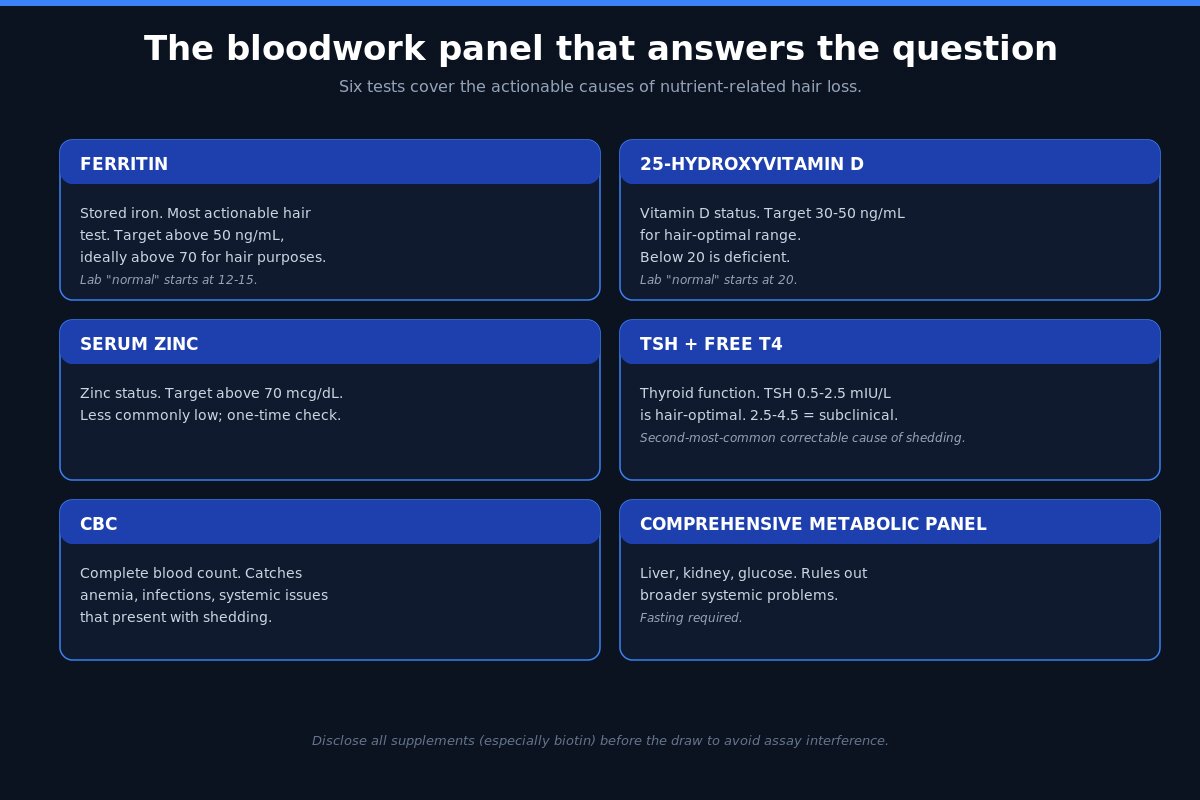
If you suspect nutrient-related shedding, the test panel is short and specific. Going through it once gives you a real answer instead of guessing.
Ferritin. Stored iron. Target above 50 ng/mL, ideally above 70 for hair purposes.
25-hydroxyvitamin D. Vitamin D status. Target 30-50 ng/mL.
Serum zinc. Less commonly low but worth one-time check. Target above 70 mcg/dL.
TSH and free T4. Thyroid function. Hyper- and hypo-thyroidism cause hair loss; this is not a nutrient but it is the second-most-common correctable cause of shedding after iron.
CBC (complete blood count). Picks up anemia, infections, and other systemic issues that can present with shedding.
Comprehensive metabolic panel. Liver, kidney, glucose. Rules out broader systemic issues.
Fasting status matters for some of these (CMP needs fasting; vitamin D and ferritin do not). Disclose all supplements – especially biotin – before drawing blood.
Reading your results
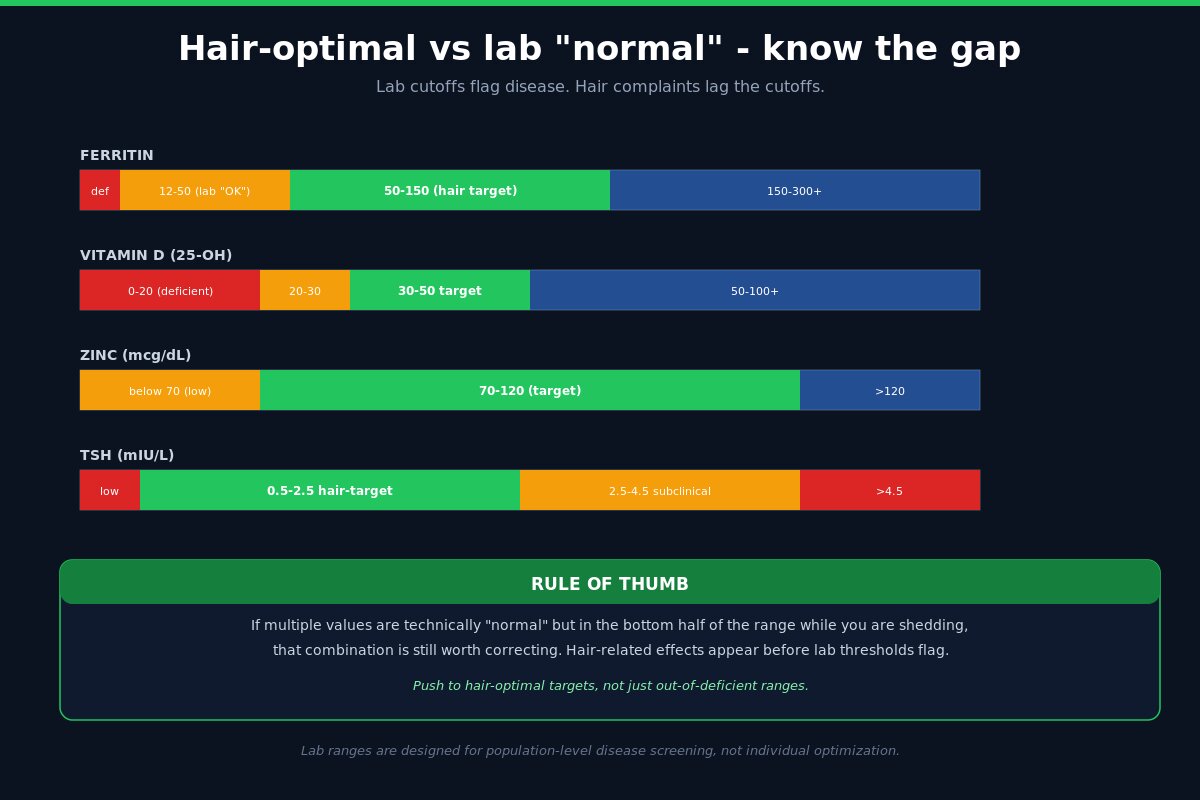
Lab “normal” ranges are set to flag disease, not optimize health. For hair purposes, the targets to aim for are above the lower bound of normal:
- Ferritin: above 50 ng/mL (lab normal often starts at 12-15)
- Vitamin D: 30-50 ng/mL (lab normal often starts at 20)
- Zinc: above 70 mcg/dL (within normal but at the higher end)
- TSH: 0.5-2.5 mIU/L (lab normal often goes up to 4.5; 2.5-4.5 is “subclinical hypothyroid” range and worth investigating if hair is shedding)
If multiple values are in the bottom half of “normal” but technically not flagged, that is still worth correcting. Hair-related complaints lag the lab cutoffs.
Repletion timeline
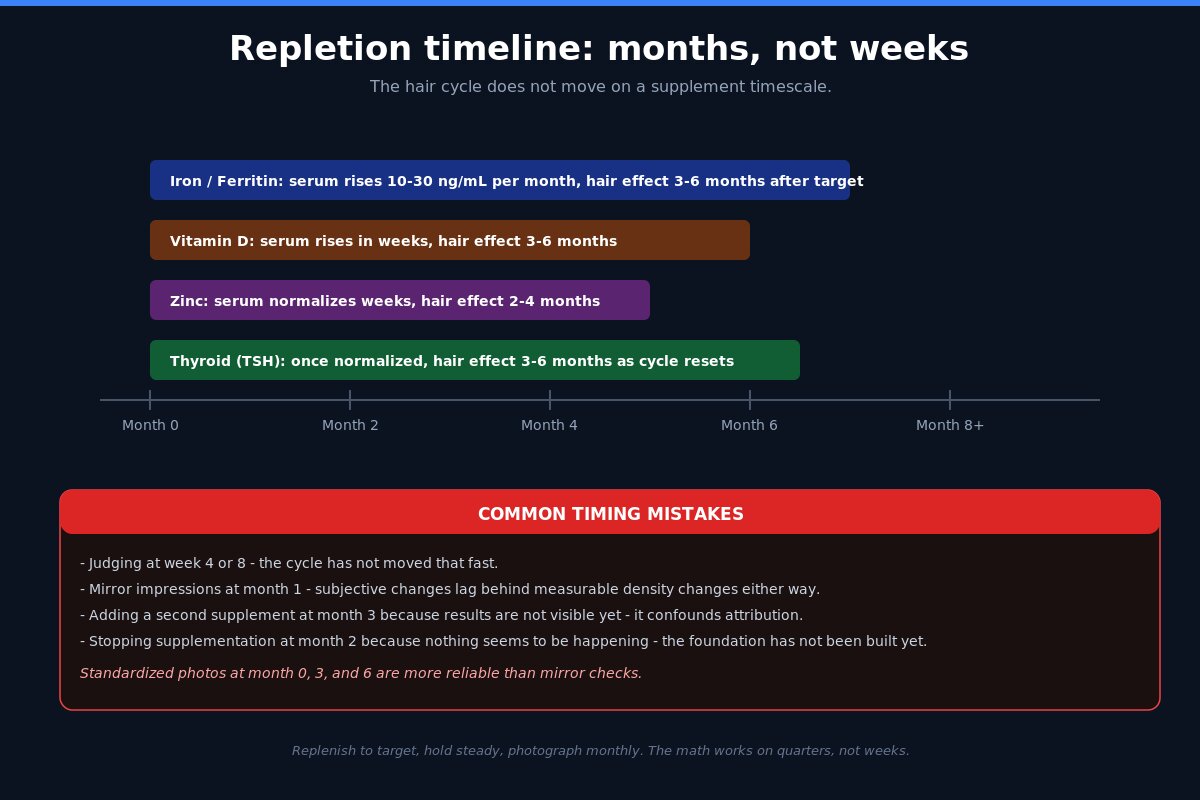
Hair cycle changes from nutrient repletion show up over months, not weeks. Realistic timelines:
Iron / ferritin: Ferritin rises about 10-30 ng/mL per month with consistent supplementation. Hair effects appear 3-6 months after stores normalize.
Vitamin D: Serum levels rise within weeks; hair-related improvement takes 3-6 months.
Zinc: Serum normalizes in weeks; hair effects in 2-4 months.
Thyroid normalization: Once TSH is in optimal range, hair improvement takes 3-6 months as the cycle resets.
The common error is judging supplementation at week 4 or 8. The cycle does not move that fast. Standardized photography at month 0, 3, and 6 is more reliable than mirror impressions.
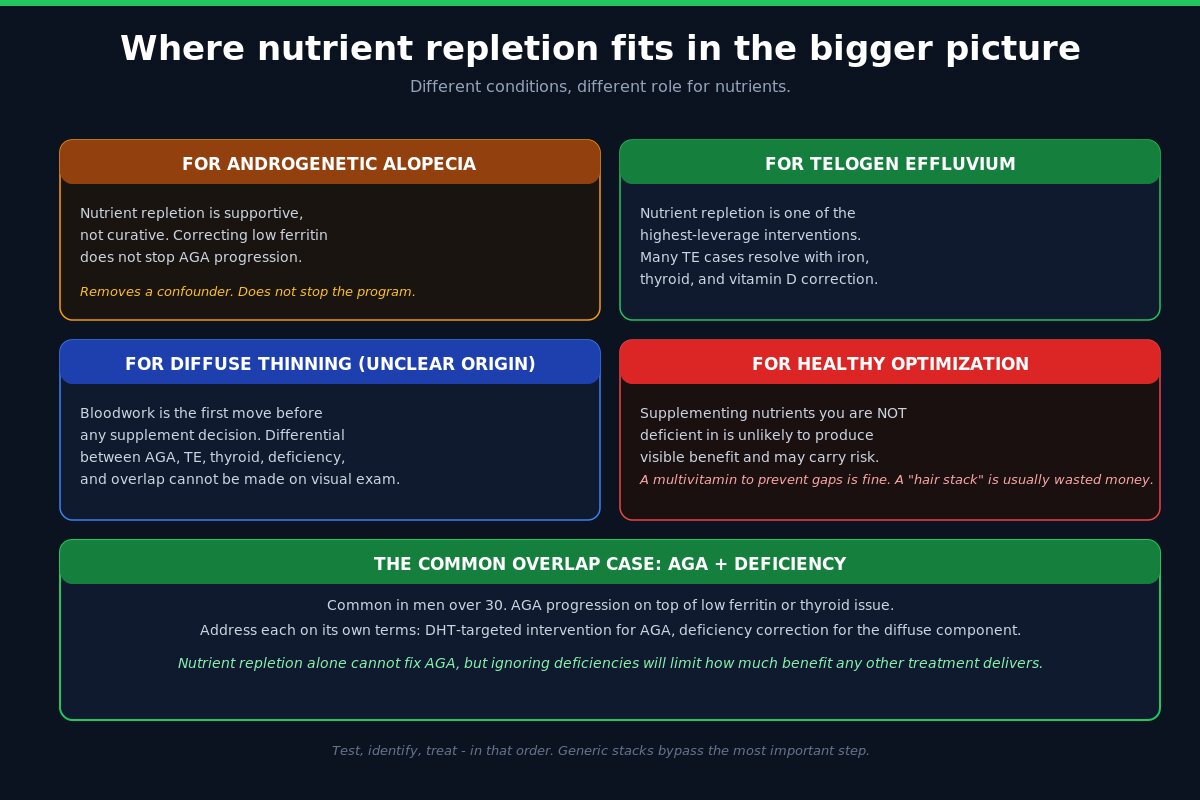
Where this fits in the broader hair loss picture
For androgenetic alopecia: nutrient repletion is supportive, not the primary intervention. The DHT pathway dominates the trajectory. Correcting low ferritin will not stop AGA; it will improve overall hair quality and remove a confounder.
For telogen effluvium: nutrient repletion is one of the highest-leverage interventions, alongside addressing the triggering event. Many TE cases resolve once iron, thyroid, and vitamin D are corrected.
For diffuse thinning of unclear origin: bloodwork is the first move before any supplement decision. The differential between AGA, TE, thyroid, deficiency, and overlap conditions cannot be made on visual exam alone.
For hair growth optimization in a healthy person: supplementing nutrients you are not deficient in is unlikely to produce visible benefit and may carry risk (vitamin A toxicity, zinc-copper imbalance, biotin assay interference).
Common myths and where they fall apart
“Hair vitamins make hair grow faster.” If you are not deficient, no. The capsule does not contain a growth signal beyond what your existing nutrient status provides. Marketing implies otherwise; the literature does not.
“Multivitamin covers all hair needs.” A reasonable multivitamin gets you to RDA on most nutrients, which prevents deficiency. It is not a hair-specific intervention. People with subclinical low ferritin or low vitamin D often need more than a multivitamin to reach hair-optimal levels.
“Plant-based diets cause hair loss.” Plant-based diets that are inadequately planned can produce iron, B12, zinc, and protein deficiencies, all of which can affect hair. A well-planned plant-based diet does not. The risk is dietary planning, not the dietary pattern itself.
“More is better with hair supplements.” Several relevant nutrients (vitamin A, selenium, zinc) cause hair loss when in excess. The dose-response curve for nutrients is U-shaped, not linear.
“Liquid biotin is faster than capsules.” No meaningful absorption difference for hair purposes. The bigger question is whether you needed biotin at all, which for most people is no.
Frequently asked questions about nutrient deficiency and hair loss
Should I get bloodwork before trying any hair supplements?
Yes. The cost-benefit of testing first dwarfs the cost-benefit of supplementing blind. Empty supplements are wasted money; missed thyroid problems are missed years of correctable shedding.
What is the most important nutrient to check?
Ferritin. It is the most consistent finding across hair shedding studies and the most actionable. Below 50 ng/mL is suboptimal for hair regardless of what lab “normal” says.
Will fixing my deficiency reverse my hair loss?
It depends on the type. Telogen effluvium driven by deficiency will largely resolve. Androgenetic alopecia will not – correcting deficiency removes a confounder but does not stop the underlying genetic-hormonal program.
How long until I see results?
3-6 months for iron, vitamin D, and zinc-related improvements. Thyroid-driven shedding similarly takes 3-6 months once TSH is normalized. Faster timelines are not realistic given how the hair cycle works.
Are hair gummy vitamins worth it?
Generally no. They are usually expensive multivitamins with biotin added. If you have a real deficiency they will not correct it adequately; if you do not, they will not help. A standalone iron supplement plus a basic multivitamin (if needed) is the cheaper, more effective path.
Can supplementation cause hair loss?
Yes, in specific cases. Excess vitamin A, excess selenium, and high-dose biotin can all cause hair issues either directly or by interfering with lab tests that miss other problems.
Does protein intake matter for hair?
Yes. Hair is made of keratin (a protein). Adequate protein intake (~0.8-1.0 g per kg body weight at minimum, more for active people) is foundational. Severe protein restriction causes hair loss; modest underconsumption produces lower hair quality over time.
How often should I retest?
If you are repleting a deficiency, retest at 3 months to confirm trajectory. Once values are in target range, annual retesting is reasonable unless symptoms change.
Do I need a “hair, skin, and nails” supplement?
Almost never. The branded combination products typically include biotin (which most people do not need), some collagen peptides (modest benefit), and a multivitamin. Cheaper to buy what you actually need separately.
What about vegans and hair loss?
The risks are iron, B12, zinc, and protein adequacy. All addressable with attention to dietary planning or targeted supplementation. Vegans should test ferritin and B12 specifically, more often than omnivores.
Bringing it together
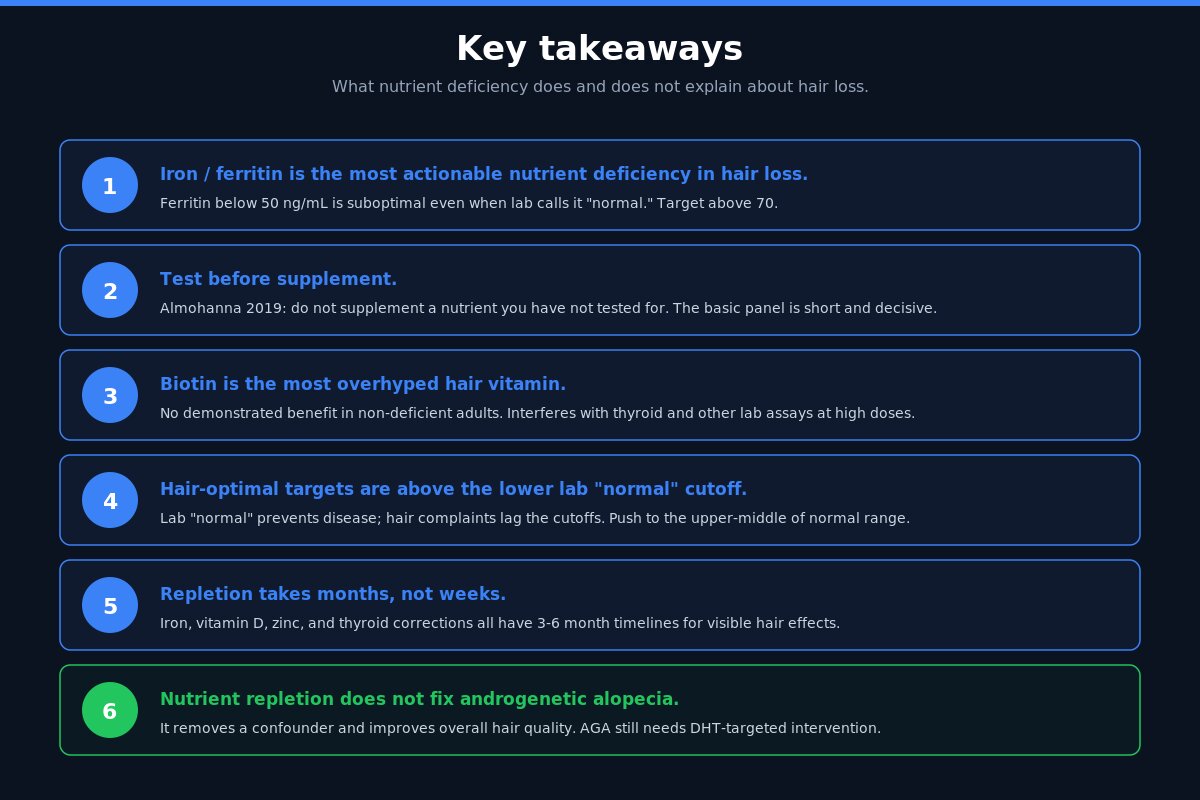
The honest picture: nutrient deficiency causes hair loss when it occurs, but it is not the cause of androgenetic alopecia. The nutrients that matter most for hair are iron (via ferritin), vitamin D, and zinc, in roughly that order of importance. Biotin is overhyped. The right move is bloodwork before supplements, target the deficiencies you actually have, and accept that timelines for repletion-driven hair changes are months. The biology of hair loss separates pattern thinning from diffuse shedding, and nutrient interventions belong in the diffuse category.
If your hair situation includes both pattern thinning and diffuse shedding (common in men over 30), the right approach is to address each on its own terms – DHT-targeted intervention for the AGA component, deficiency correction for the TE component. The framework for that overlap is in why your protocol may not be working, and the specific stress-versus-AGA differential adds another layer covered in the stress and cortisol piece. Test, then act.
This article is for educational purposes only and does not constitute medical advice. Hair loss has multiple potential causes and the right approach depends on your individual history, examination, and bloodwork. Speak with a qualified clinician before starting or stopping any treatment or supplement. See the full disclaimer.
About the author
Philippe Boissard
Author of Men’s Hairloss Protocol (2020), Better, Smarter, Stronger (2023), and Multi-Axis Body (2025). Researches and writes about hair loss and male physiology, citing primary literature and disclosing affiliate relationships in full. Not a medical doctor; all content is educational. More about Philippe.
Related reading
Get my free hair-loss protocol
The exact evidence-based routine I actually use and recommend: what works, in what order, with no hype. Enter your email on the next page and I’ll send it straight to you.
Send me the free protocol →
[…] Iron, Ferritin, Vitamin D, Zinc: Nutrient Deficiency and Hair Loss […]
[…] the framework for ruling out the cheap fixes (iron, thyroid, vitamin D) before assuming AGA is in the nutrient deficiency analysis, and the stress-versus-AGA differential gets its own treatment in the stress and cortisol piece. […]
[…] Iron, Ferritin, Vitamin D, Zinc: Nutrient Deficiency and Hair Loss […]
[…] Iron, Ferritin, Vitamin D, Zinc: Nutrient Deficiency and Hair Loss […]
[…] Iron, Ferritin, Vitamin D, Zinc: Nutrient Deficiency and Hair Loss […]
[…] Iron, Ferritin, Vitamin D, Zinc: Nutrient Deficiency and Hair Loss […]