
Ketoconazole Shampoo: Why 1% Doesn’t Work and 2% Barely Does

Ketoconazole shampoo is the most-recommended cheap adjunct in hair loss, and most men get it wrong twice. They buy the 1 percent OTC version and expect prescription-strength results, then they use it like regular shampoo and never give the active ingredient enough contact time. The trial-validated protocol uses 2 percent ketoconazole, 3-5 minute dwell, 2-3 times per week. Anything less is sub-therapeutic.
Quick answer
At 2 percent, used correctly, yes – modestly. Pierard-Franchimont 1998 showed measurable hair shaft diameter and density improvements over six months in AGA, comparable to 2 percent minoxidil. Inui & Itami 2007 documented the anti-androgenic mechanism. The effect is real but small. Adjunct, not primary therapy. The 1 percent OTC formulations are sub-therapeutic. The clinical data is on 2 percent. Mechanism background in how hair loss actually works.
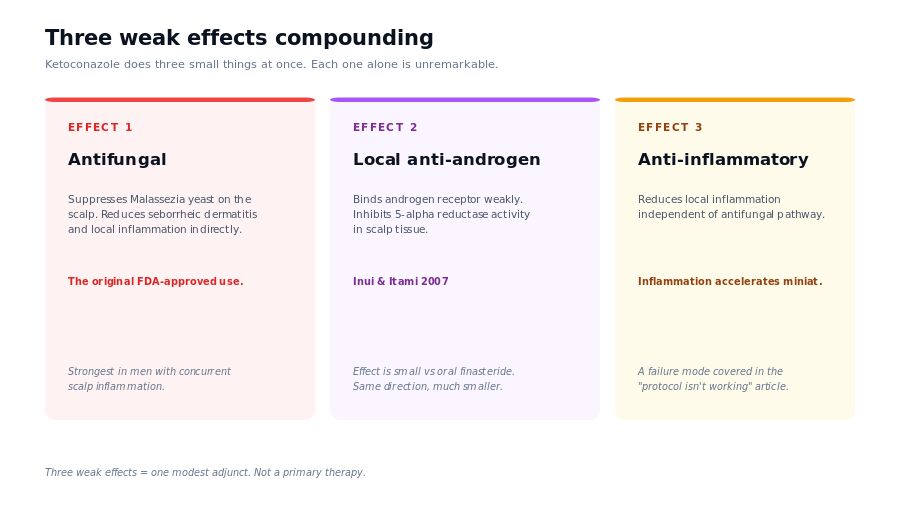
Mistake 1: 1 percent OTC version
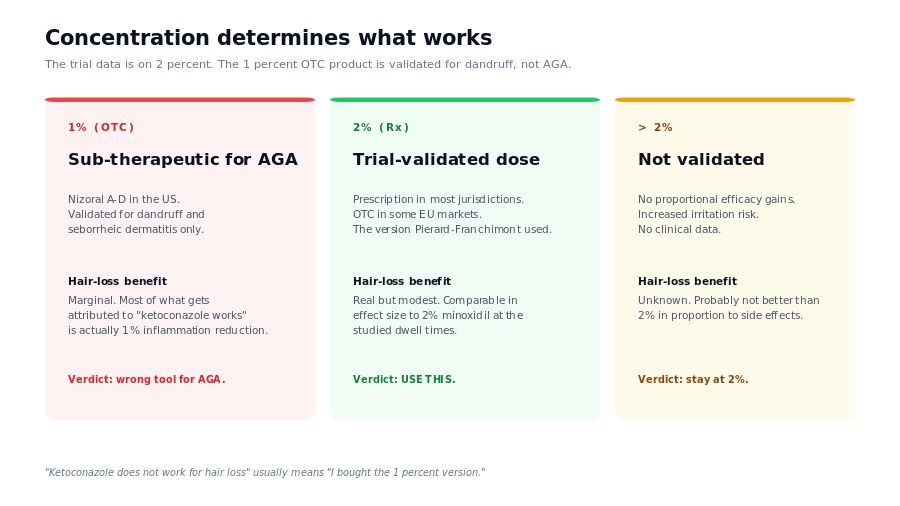
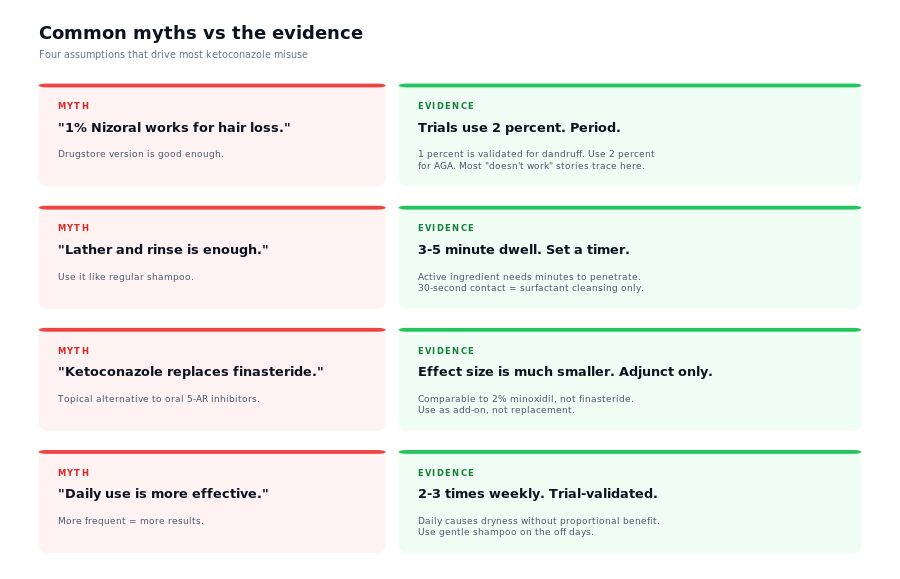
Consumer formulations are 1 percent. The clinical data is 2 percent. Concentration matters because ketoconazole has poor scalp penetration. Get a prescription for 2 percent or order from a jurisdiction where it is OTC. “Ketoconazole does not work” usually means “I bought the 1 percent version.”
Mistake 2: no dwell time
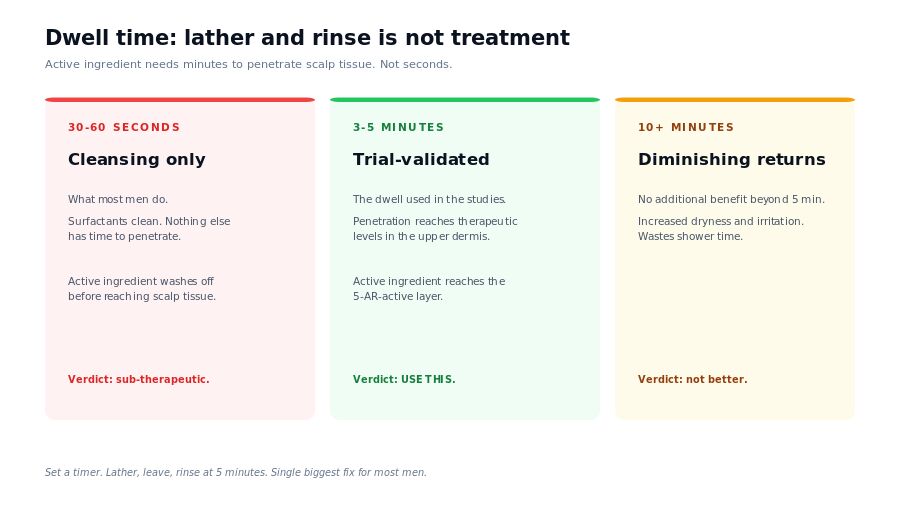
Most men shampoo, lather, rinse – 30-60 seconds total. Enough for cleansing. Not enough for a topical drug to reach scalp tissue. Trial protocols use 3-5 minute dwells. The active ingredient needs that window to penetrate the stratum corneum and reach the upper dermis where 5-AR activity occurs. Lather, set a timer, leave on for five minutes while you finish the rest of the shower, then rinse.
The trial evidence base
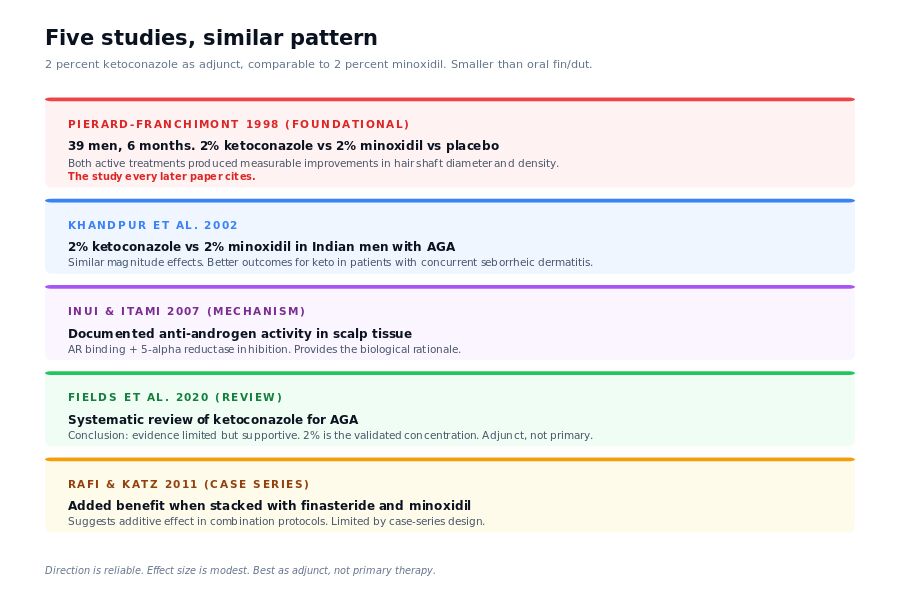
- Pierard-Franchimont 1998: 39 men, 6 months. 2% ketoconazole vs 2% minoxidil vs placebo. Measurable improvements in hair shaft diameter and density. Foundational study.
- Khandpur 2002: 2% keto vs 2% minoxidil. Similar effects. Better outcomes for keto with concurrent seborrheic dermatitis.
- Inui & Itami 2007: mechanism. AR binding and 5-AR inhibition in scalp tissue.
- Fields 2020: systematic review. 2% is the validated concentration. Adjunct, not primary.
- Rafi & Katz 2011: case series. Additive benefit when stacked with finasteride and minoxidil.
The protocol
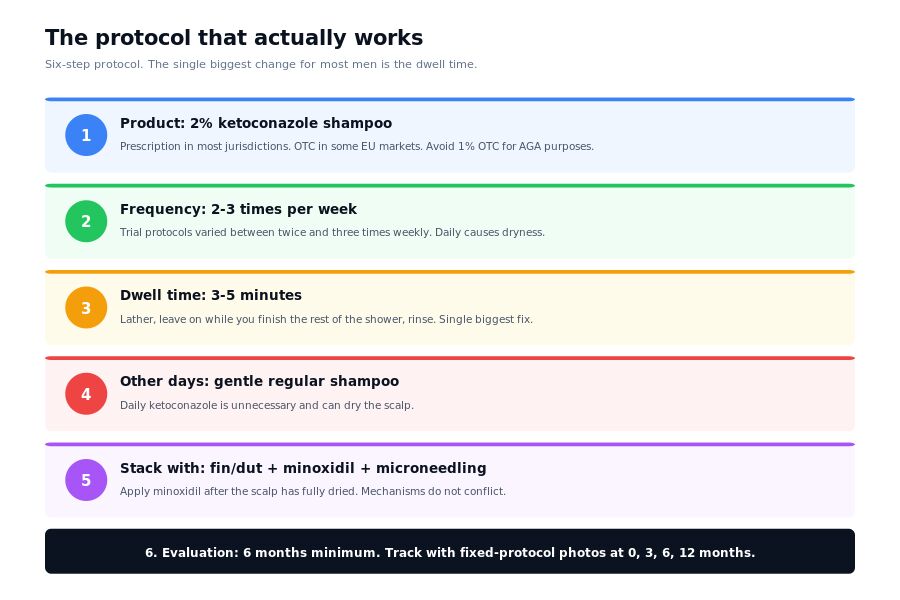
- Product: 2 percent ketoconazole shampoo (prescription in most jurisdictions).
- Frequency: 2-3 times per week.
- Dwell time: 3-5 minutes.
- Other days: regular gentle shampoo.
- Stack with: finasteride/dutasteride, minoxidil, microneedling. See why finasteride fails some men and why I do not take minoxidil.
- Evaluation: 6 months minimum. Fixed-protocol photos.
Who it fits
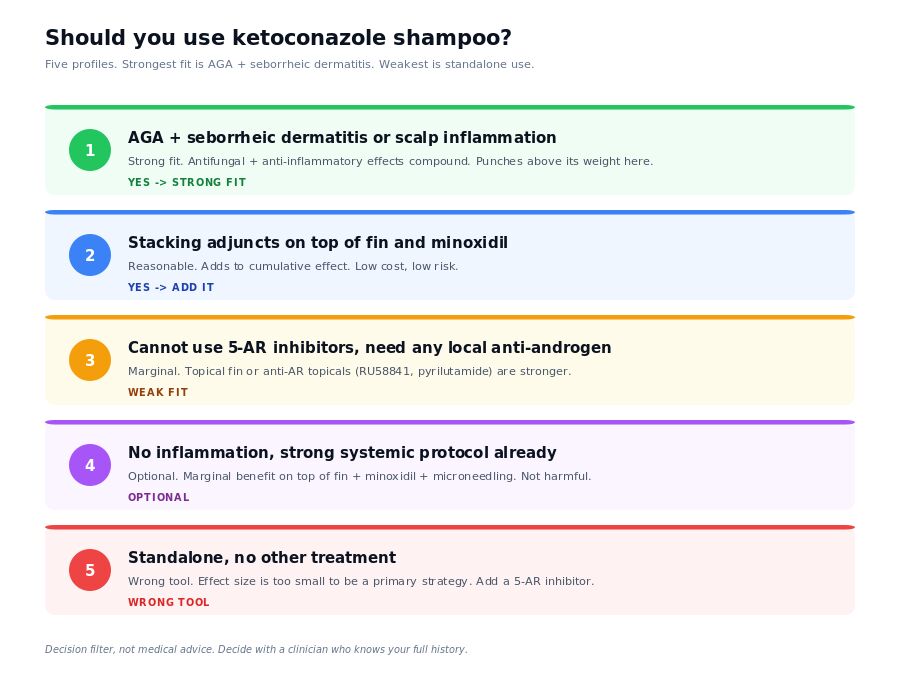
- AGA + seborrheic dermatitis: strong fit.
- Stacking on top of fin/minoxidil: reasonable.
- Cannot use 5-AR inhibitors: marginal addition.
- Strong systemic protocol already: optional.
- Standalone primary therapy: wrong tool. See why your hair loss protocol isn’t working.
Why this video is relevant: ketoconazole is a textbook case where formulation and application technique determine the result. The 1 vs 2 percent and 30 seconds vs 5 minutes problem in this article is exactly that logic applied.
Common myths
FAQ
What concentration?
2 percent. 1 percent is for dandruff.
How often?
2-3 times per week.
Dwell time?
3-5 minutes.
Replace finasteride?
No. Effect size is much smaller.
With fin and minoxidil?
Yes. Apply minoxidil after the scalp dries.
How long until results?
6 months minimum.
Bringing it together
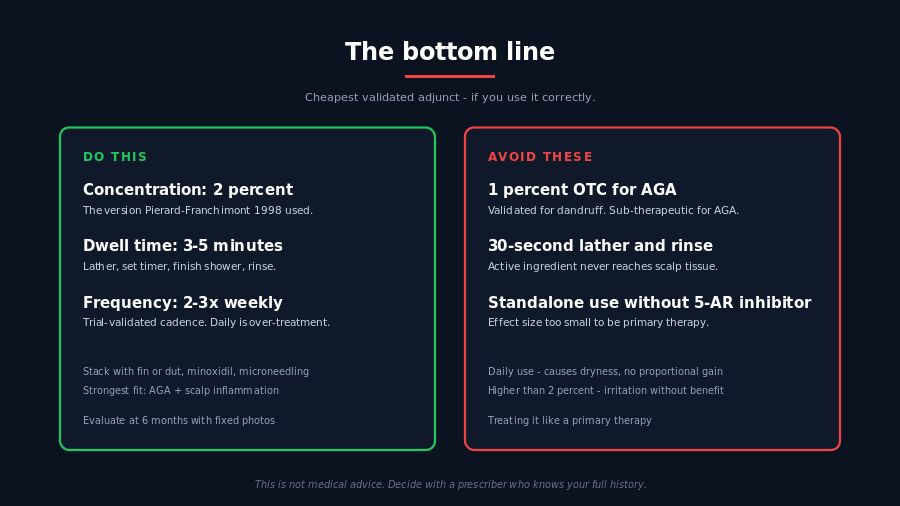
Ketoconazole shampoo is the cheapest validated adjunct in hair loss when used correctly. 2 percent, 3-5 minute dwell, 2-3 times weekly. 1 percent OTC is for dandruff. Lather-and-rinse gives the active ingredient no time to work. Treat as complement to finasteride or dutasteride, not substitute. Foundation: how hair loss actually works. Decision logic: why finasteride fails some men. Adjunct stacking: why your hair loss protocol isn’t working. Minoxidil context: why I do not take minoxidil.
Not medical advice. See disclaimer.
Related reading
About the author
Philippe Boissard
Author of Men’s Hairloss Protocol (2020), Better, Smarter, Stronger (2023), and Multi-Axis Body (2025). Researches and writes about hair loss and male physiology, citing primary literature and disclosing affiliate relationships in full. Not a medical doctor; all content is educational. More about Philippe.
Get my free hair-loss protocol
The exact evidence-based routine I actually use and recommend: what works, in what order, with no hype. Enter your email on the next page and I’ll send it straight to you.
Send me the free protocol →
[…] aimed at the actual mechanism. I have covered what the evidence supports for that in my piece on ketoconazole 1% versus 2% and in the combination therapy […]