
How Hair Loss Actually Works: The Complete Biology Guide

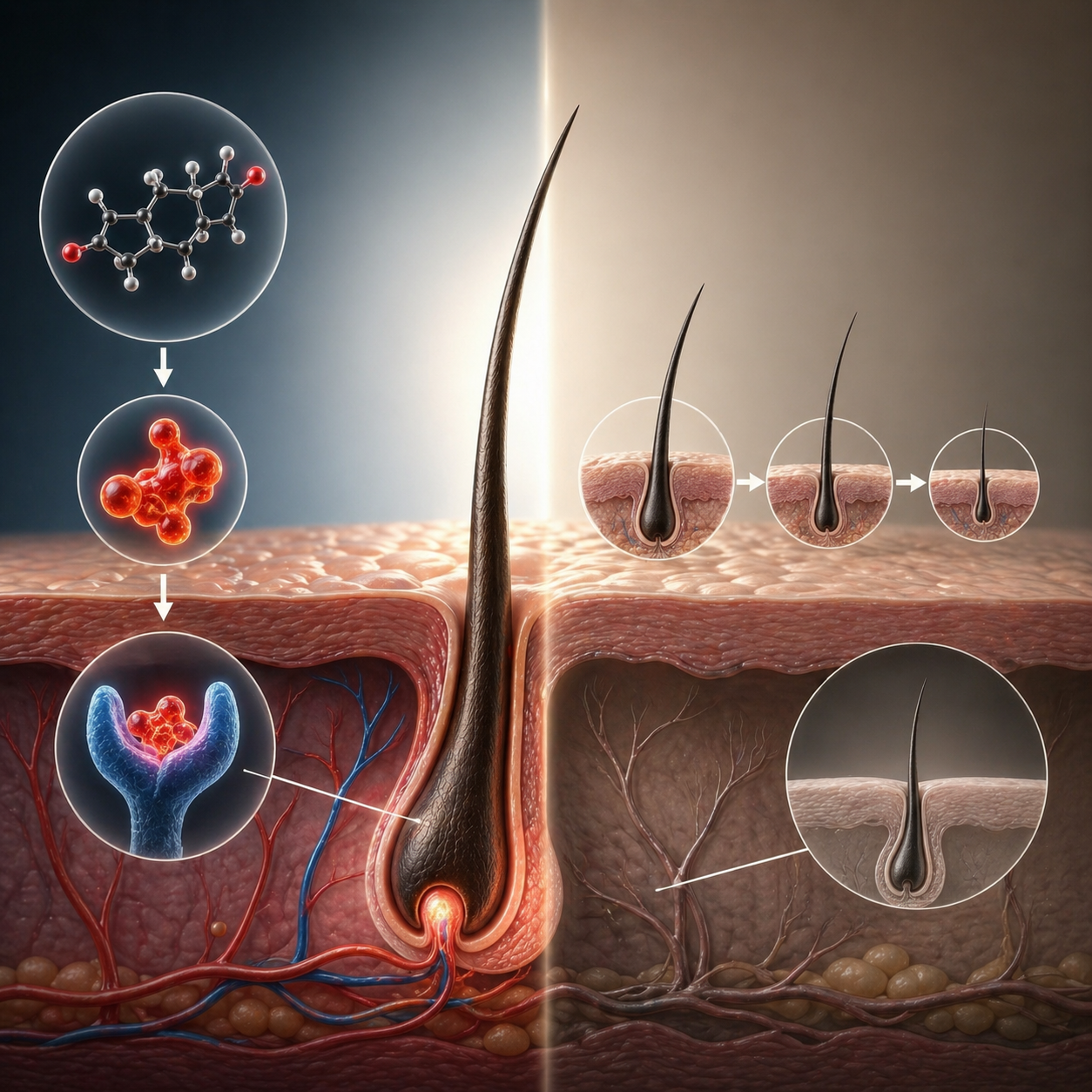
If you understand how hair loss actually works at the biological level, every treatment decision becomes simpler. This is the complete guide – built from peer-reviewed studies, clinical reviews, and the same research framework I apply to my own protocol. Bookmark it. The article is structured so you can jump to the section that matters most for where you are right now.
Quick answer: how does hair loss actually work?
Hair loss is not a single disease. It’s an umbrella term for several distinct biological processes – but the most common form by a wide margin is androgenetic alopecia (also known as male pattern baldness or female pattern hair loss), which accounts for around 95% of male hair loss and a significant portion of female cases. In androgenetic alopecia, a hormone called dihydrotestosterone (DHT) binds to androgen receptors inside genetically susceptible hair follicles, progressively shortens the growth phase of each follicle, and shrinks the follicle itself across multiple growth cycles – a process called follicular miniaturization. Eventually the follicle becomes too small to produce a visible hair, and the affected area appears bald.
The rest of this article unpacks every layer of that sentence – the hair growth cycle, the role of testosterone and 5-alpha reductase, the genetics of receptor sensitivity, the inflammatory and fibrotic mechanisms that make late-stage loss permanent, and the other forms of hair loss that are often confused with androgenetic alopecia. By the end you’ll have a working mental model of what’s happening on your scalp and which treatment categories actually address it.
The hair growth cycle: anagen, catagen, telogen, exogen
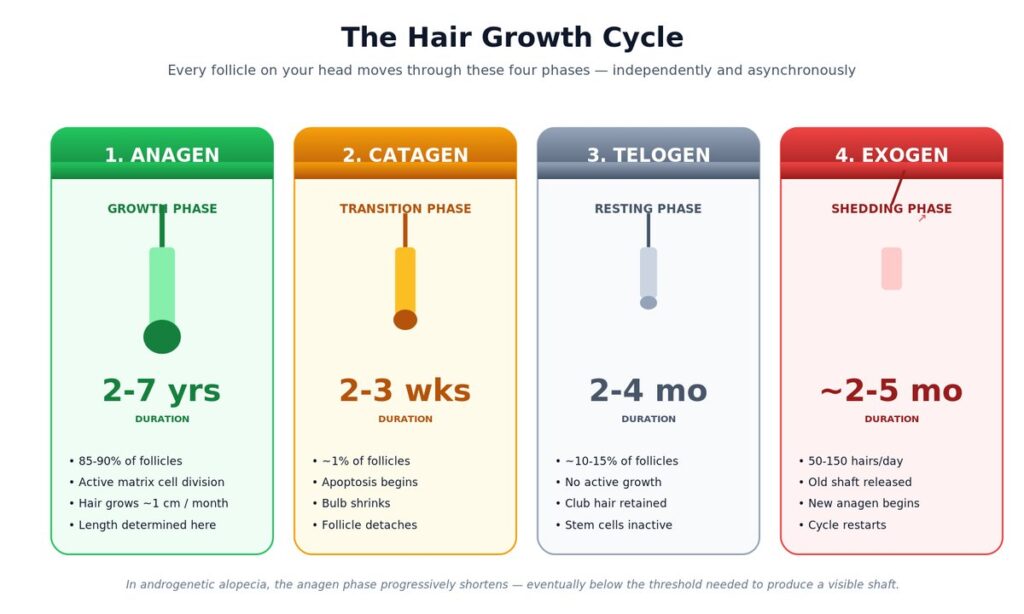
Every hair follicle on your scalp moves through a repeating four-phase cycle. Understanding these phases is foundational, because every form of hair loss is, mechanically, a disruption of this cycle.
Anagen – the growth phase
Anagen is the active growth phase. It lasts two to seven years on the scalp and represents 85-90% of follicles at any given time. During anagen, the hair matrix at the base of the follicle divides rapidly, building the keratinized shaft. The hair grows roughly one centimeter per month. The duration of anagen determines the maximum length of the hair, which is why scalp hair grows long and eyebrow hair does not – different follicle populations have different anagen durations.
The most consequential fact about anagen for hair loss research: androgens shorten anagen in genetically susceptible follicles. Each successive cycle in an affected follicle has a slightly shorter anagen, which means each successive hair is slightly shorter and thinner than the last.
Catagen – the transition phase
Catagen is a brief, controlled regression – typically two to three weeks. The lower portion of the follicle undergoes apoptosis (programmed cell death), the dermal papilla detaches from its blood supply, and the bulb shrinks. Only about 1% of follicles are in catagen at any moment.
Telogen – the resting phase
Telogen lasts two to four months and accounts for 10-15% of scalp follicles in a healthy person. The follicle is quiet – no growth, no shedding, just a “club hair” sitting in the resting follicle while stem cells in the bulge wait for the signal to start a new anagen. When something globally pushes more follicles than usual into telogen at the same time – illness, surgery, severe stress, certain medications – the result is telogen effluvium, which we’ll cover later.
Exogen – the shedding phase
For a long time exogen was lumped into telogen, but it’s now recognized as its own phase. The old club hair is actively released from the follicle while a new anagen hair begins to push up from below. Healthy people shed 50 to 150 hairs per day in exogen – that volume on your pillow or in the shower drain is normal physiology, not pathology.
Hair follicle anatomy: where hair loss is decided
To understand why androgenetic alopecia happens at the molecular level, you need to know what’s inside a follicle. The structure is more complex than most people imagine.
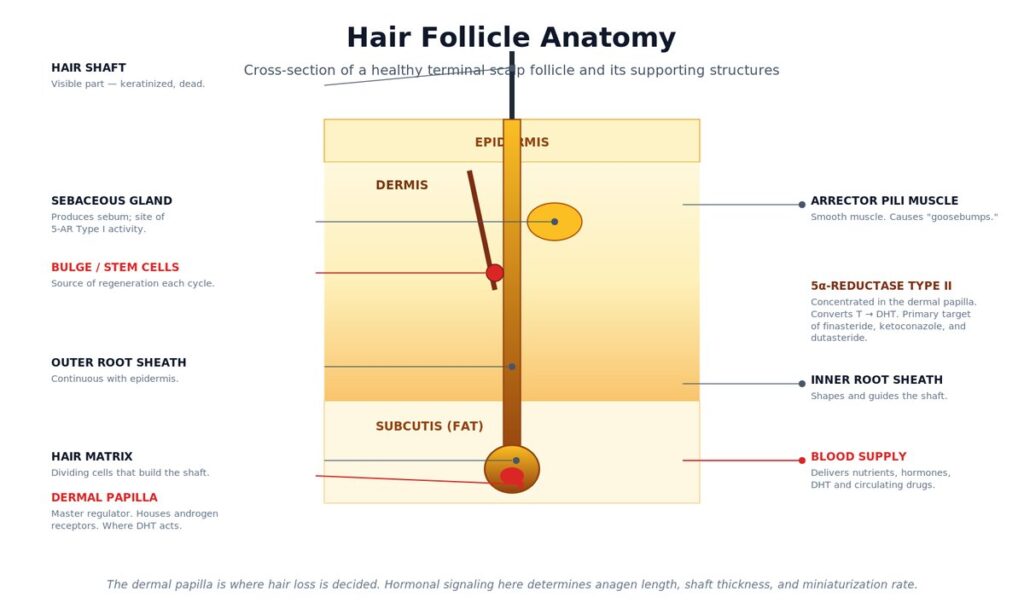
The hair shaft is the part you see – fully keratinized, biologically dead. It’s the output, not the engine. Everything that determines whether a hair grows happens beneath the skin.
The dermal papilla at the base of the follicle is the master regulator. It’s a small cluster of specialized mesenchymal cells that contains the highest density of androgen receptors in the entire follicle. The dermal papilla also contains the highest concentration of 5-alpha reductase Type II, the enzyme that converts testosterone into DHT. This is why scalp follicles are the site of action for androgenetic alopecia: the hormone is converted to its active form right next to the receptors that bind it.
The hair matrix, immediately above the dermal papilla, is a layer of rapidly dividing cells that physically build the hair shaft. Matrix cells are some of the most metabolically active cells in the body – comparable to bone marrow – which is why chemotherapy, which targets fast-dividing cells, causes anagen effluvium.
The bulge region in the upper follicle houses follicular stem cells. These cells are the source of regeneration: at the start of each new cycle, they migrate down and repopulate the matrix. Damage to the bulge – from inflammation, scarring, or repeated mechanical injury – produces permanent, non-recoverable hair loss. This is why scarring alopecia is irreversible while androgenetic alopecia, in its early stages, is not.
Surrounding the follicle: the sebaceous gland (which secretes sebum and is itself a site of 5-alpha reductase Type I activity), the arrector pili muscle, and a dense network of capillaries that delivers hormones, nutrients – and any drug you absorb systemically – to the dermal papilla.
Androgenetic alopecia: the DHT story
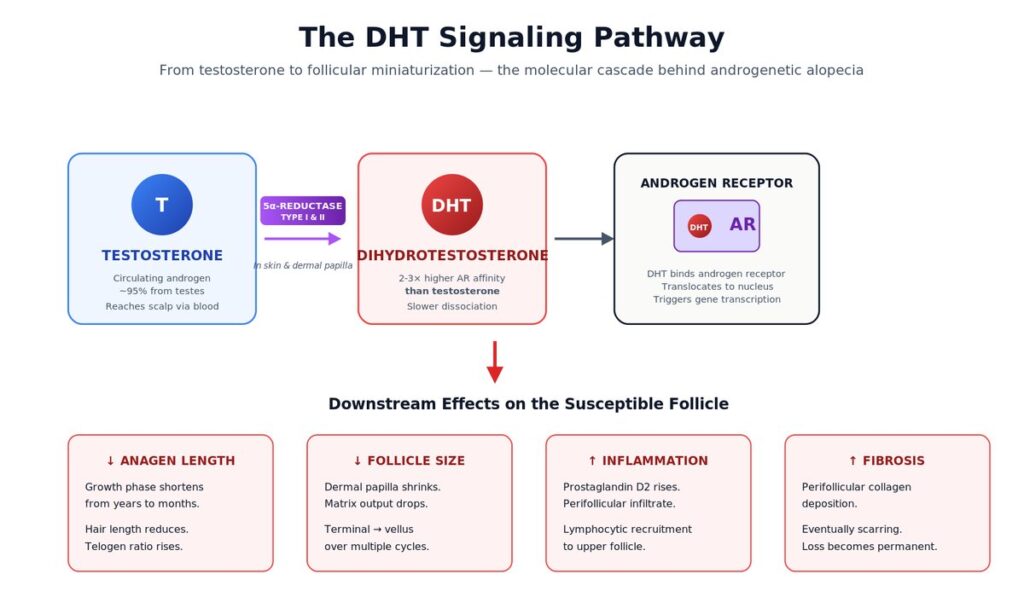
Androgenetic alopecia is a hormonal disease in genetically susceptible people. Three things have to be true simultaneously for it to occur: circulating androgens (testosterone), local conversion to DHT (via 5-alpha reductase), and androgen receptors in the follicle that respond to DHT in a way that suppresses hair growth. Remove any one of these inputs and the disease does not progress.
From testosterone to DHT
Testosterone circulates in the blood at concentrations roughly 7-8 times higher than DHT in adult men. But testosterone is a relatively weak ligand for the androgen receptor. Once it diffuses into a target tissue – the prostate, sebaceous glands, scalp dermal papilla – local 5-alpha reductase enzymes convert it into DHT, which binds the androgen receptor with 2-3 times higher affinity and dissociates roughly 5 times more slowly. The receptor stays “on” for longer with DHT than with testosterone.
There are two clinically important isoforms of 5-alpha reductase:
- Type I – sebaceous glands, liver, scalp skin. Less abundant in the dermal papilla itself.
- Type II – concentrated in the dermal papilla, prostate, hair follicles, epididymis. The dominant enzyme driving androgenetic alopecia.
Finasteride, the FDA-approved oral hair loss drug, primarily inhibits Type II. Dutasteride inhibits both. Ketoconazole – used in anti-dandruff shampoos – exhibits weak local 5-alpha reductase inhibition, which is part of why it has hair loss benefits independent of its antifungal activity (Pierard-Franchimont et al., 1998; subsequent reviews). Finasteride doesn’t work uniformly for everyone, though – I’ve covered why finasteride fails some men even when it’s technically “working” in a separate breakdown.
The classic evidence: 5-alpha reductase deficiency
The most striking evidence for DHT’s role comes from a population studied by Imperato-McGinley and colleagues beginning in the 1970s – genetically male individuals in the Dominican Republic with congenital 5-alpha reductase Type II deficiency. These individuals had near-normal testosterone but very low DHT. Notably, they did not develop male pattern baldness, even into old age. They also had reduced prostate development. The same enzyme that builds the prostate and processes testosterone in scalp follicles is the one driving androgenetic alopecia. That study is essentially the proof-of-concept for finasteride.
An older, cruder version of the same evidence: James Hamilton’s 1942 observation that men castrated before puberty did not develop male pattern baldness, regardless of their family history. Restore testosterone in adulthood, and any genetic predisposition to baldness expresses itself.
Androgen receptor sensitivity: why it’s mostly genetic
Two men with identical DHT levels can have completely different hair loss outcomes. The reason is that the relevant trait is not “how much DHT do you have” – it’s “how sensitively do your follicles respond to DHT.” That sensitivity is largely genetic.
Genome-wide association studies, including a large 2017 analysis (Heilmann-Heimbach et al.), have now identified more than a dozen loci associated with male pattern baldness risk. The single strongest signal sits in the androgen receptor (AR) gene on the X chromosome. Variants in this region influence the number of CAG repeats in the receptor – fewer repeats correlate with a more transcriptionally active receptor and earlier, more aggressive hair loss. Other identified loci affect cell-cycle regulation, Wnt signaling, and follicle development. The X-linked AR gene is why the maternal grandfather’s hair pattern has historically been considered a useful (though imperfect) predictor.
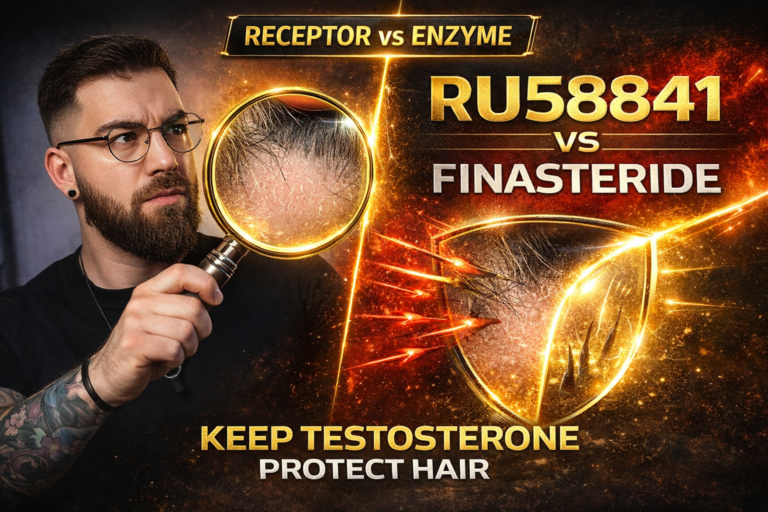
The practical implication: if your susceptibility lives in the receptor itself, lowering DHT (with finasteride, dutasteride, ketoconazole, saw palmetto) reduces ligand availability – but blocking the receptor directly (with topical anti-androgens like RU58841 or pyrilutamide) intervenes one step downstream, where the actual disease mechanism plays out.
Follicular miniaturization: the slow disappearance
Hair in androgenetic alopecia does not “fall out” in the way most people imagine. The follicle is still there. What’s happening is that each new growth cycle produces a slightly smaller, slightly thinner, slightly shorter hair than the last. Repeat that across 10-15 cycles spanning 10-25 years, and the follicle eventually produces a hair so fine and short it’s cosmetically invisible – a vellus hair, indistinguishable from peach fuzz.
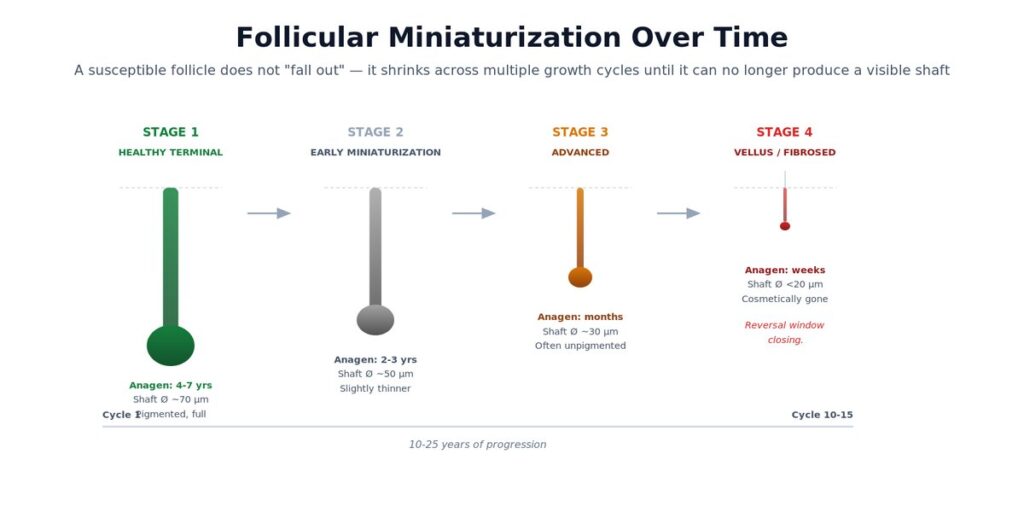
Three things shrink in parallel during miniaturization:
- Anagen duration drops from years to months to weeks.
- Hair shaft diameter drops from ~70 microns in a healthy terminal hair to under 20 microns in a vellus hair.
- Pigmentation declines, because melanocytes in the matrix produce less pigment when anagen is short.
This is why men who say “my hair is getting thinner before it falls out” are reporting the disease accurately. The thinning is the disease. Density loss comes later, after enough cycles have miniaturized below the visibility threshold.
The clinical implication is that early intervention has higher leverage than late intervention. A follicle in stage 2 miniaturization that is rescued back toward terminal status produces a thicker, longer, more visible hair than a follicle in stage 4 that’s been vellus for years. Once the follicle has been miniaturized for a long time and surrounding fibrosis has set in, full reversal becomes biologically harder – possibly impossible without regenerative therapies still in development.
Inflammation and fibrosis: the underdiscussed mechanism
For decades the discussion of androgenetic alopecia was DHT-only. More recent research has clarified that inflammation and fibrosis are not bystanders – they’re active participants in why miniaturization eventually becomes irreversible.
Histology of androgenetic alopecia scalps consistently shows a perifollicular lymphocytic infiltrate in the upper follicle, particularly around the bulge stem cell region. Mahe and colleagues coined the term “microinflammation” to describe this finding, distinguishing it from the more dramatic inflammation of scarring alopecias but emphasizing that it is real and pathologically meaningful.
Downstream of that infiltrate, perifollicular fibrosis develops – collagen is deposited around the upper follicle, narrowing the channel through which the hair shaft has to grow. This fibrotic remodeling helps explain why some advanced cases respond poorly to even effective anti-androgen therapy: even if you correct the hormonal signal, you can’t easily reverse the architectural damage.
The inflammation also has biochemical drivers worth knowing about. Prostaglandin D2 (PGD2) is elevated in bald scalp tissue compared to haired scalp (Garza et al., 2012, Science Translational Medicine) and inhibits hair growth in laboratory models. Oxidative stress markers are also elevated. These pathways are why ketoconazole, which suppresses inflammatory prostaglandins in addition to its mild 5-alpha reductase activity, performs better in head-to-head trials than its antifungal activity alone would predict.
Stem cells and the regeneration question
One of the most consequential recent findings in hair loss research is that bulge stem cells in androgenetic alopecia are still present – even in long-term bald scalp. Garza and colleagues demonstrated this in 2011: bald and haired scalp had similar numbers of CD200+ bulge stem cells. What was missing was the progenitor cells those stem cells are supposed to produce. The stem cells were there but failing to commit to the next generation.
That finding is a foundational reason newer-generation hair loss research targets stem cell activation rather than (or in addition to) hormonal suppression. Compounds in this category – including PP405 and the related research compound JXL069 – work on metabolic and Wnt-pathway signaling rather than the androgen axis. The premise: if the stem cells are dormant rather than dead, you can wake them up.
This is also why microneedling – controlled mechanical injury to the scalp – produces measurable hair count improvements in randomized trials. The mechanical signal triggers wound-healing pathways, releases growth factors, and activates Wnt/beta-catenin signaling, which in turn nudges dormant follicles back into anagen.
The other forms of hair loss (and why diagnosis matters)
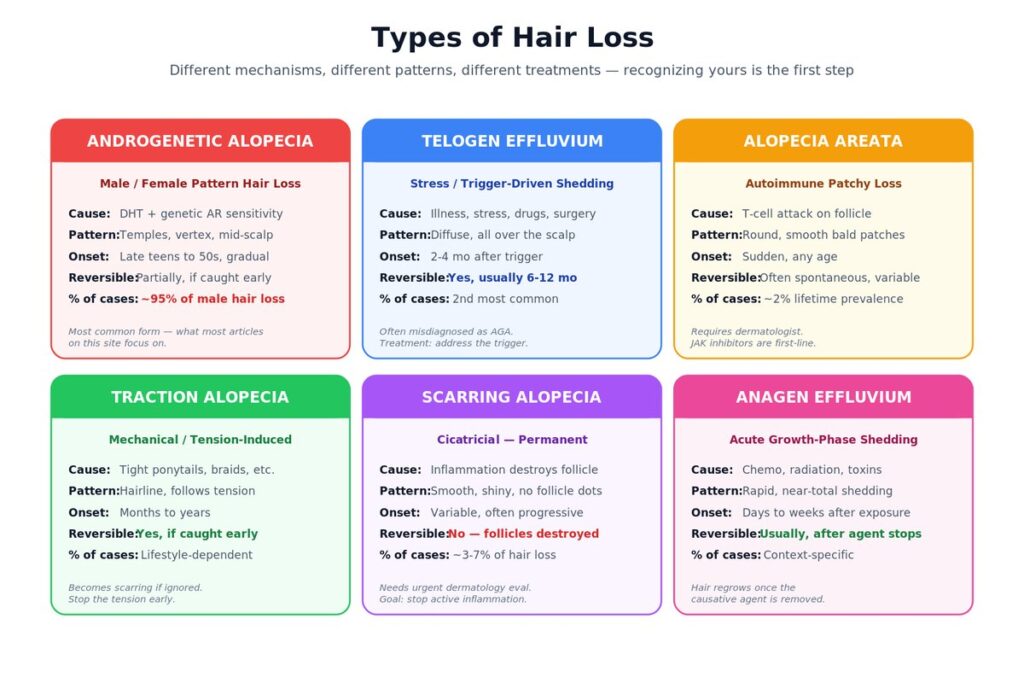
Androgenetic alopecia accounts for the vast majority of hair loss but it is not the only cause. Confusing one form for another is a frequent reason people end up on the wrong treatment for years.
Telogen effluvium: the diffuse shedder
In telogen effluvium, a global trigger pushes a large fraction of follicles into telogen at the same time. Two to four months after the trigger, you experience an alarming surge of shedding – sometimes 200-400 hairs per day instead of the normal 50-150. Common triggers: childbirth, surgery, severe illness or COVID-19 infection, crash dieting, iron or vitamin D deficiency, thyroid dysfunction, starting or stopping certain medications. The pattern is diffuse, across the whole scalp, rather than concentrated at the temples or vertex. Crucially, it is reversible: address the trigger and density typically returns within 6-12 months.
Telogen effluvium is also one of the most-misdiagnosed forms of hair loss. Because the visible symptom is shedding, many people assume it’s male or female pattern baldness and self-prescribe minoxidil or finasteride. If the underlying issue is iron deficiency or thyroid hypofunction, that approach treats neither.
Alopecia areata: autoimmune patches
Alopecia areata is an autoimmune disease in which T-cells attack the anagen follicle. The pattern is distinctive – round, smooth, completely bald patches with a sharp border. It can occur at any age, in either sex, and ranges from a single small patch (alopecia areata) to total scalp loss (alopecia totalis) to total body hair loss (alopecia universalis). Treatment is dermatology-led; topical or intralesional steroids and, more recently, JAK inhibitors are the modern standards. Anti-androgen therapy does not address it.
Traction alopecia
Traction alopecia is mechanical. Persistent tension on the hair – tight ponytails, braids, weaves, certain religious headwear, frequent hair extensions – pulls follicles out of their natural orientation and damages them. The pattern follows the line of tension, often most visible at the hairline. Caught early, it is fully reversible by removing the tension. Left alone, it becomes a scarring alopecia and the loss is permanent.
Scarring (cicatricial) alopecias
Scarring alopecias – including frontal fibrosing alopecia, lichen planopilaris, and central centrifugal cicatricial alopecia – are inflammatory diseases that destroy the follicle and replace it with fibrotic tissue. The clinical clue is the loss of follicular openings – the affected scalp looks smooth and almost shiny, without the small dots that mark where follicles emerge in healthy skin. These conditions need urgent dermatologic evaluation. The follicles, once destroyed, cannot regenerate; the goal of treatment is to halt active inflammation and preserve what remains.
Anagen effluvium
Anagen effluvium is the rapid, near-total shedding triggered by an agent that disrupts the matrix’s rapid cell division – most commonly chemotherapy, but also radiation and certain toxins. It happens within days to weeks of exposure, not the months-later timeline of telogen effluvium. Once the causative agent is removed, the matrix recovers and hair regrows.
Hormones beyond DHT
DHT is the headline hormone in androgenetic alopecia, but several other endocrine signals modulate hair growth and need to be in range for any treatment to perform optimally.
Thyroid hormones directly regulate the hair growth cycle. Both hypothyroidism and hyperthyroidism can produce diffuse hair shedding, often through a telogen-effluvium-like mechanism. Anyone with unexplained hair loss should have their TSH (and ideally free T4 and free T3) checked.
Cortisol from chronic stress can prolong telogen and shorten anagen via mechanisms that overlap with telogen effluvium. The pattern of hair loss following a difficult life event is biologically real and well-documented.
Estrogen tends to extend anagen, which is part of why pregnancy is associated with thicker, fuller hair, and why postpartum estrogen withdrawal triggers postpartum telogen effluvium 2-4 months after delivery.
Prolactin and androgens in women become relevant when female pattern hair loss is more aggressive or younger than expected – conditions like polycystic ovary syndrome (PCOS) raise androgens and accelerate hair loss in genetically susceptible women.
Nutrition, the scalp microbiome, and lifestyle factors
No supplement reverses androgenetic alopecia. But several nutritional deficiencies are well-documented to cause or exacerbate hair shedding, and correcting them is a prerequisite for any other treatment to work.
- Iron / ferritin – low iron stores are one of the most common reversible causes of diffuse hair shedding, particularly in menstruating women. Ferritin under ~40 ng/mL is associated with worse hair growth in some studies, though guidelines vary.
- Vitamin D – receptors are expressed in the dermal papilla; deficiency is correlated with telogen effluvium and possibly with worse androgenetic alopecia outcomes.
- Zinc – required for keratinization; deficiency causes diffuse shedding.
- Protein – chronically inadequate protein intake (severe dieting, eating disorders, certain bariatric situations) causes shedding because hair is structurally protein.
- Biotin – only useful in the rare case of true biotin deficiency. Most “hair vitamins” overpromise here.
The scalp microbiome is an emerging area. Malassezia yeasts, normal residents of human scalp, can become overgrown in some people and contribute to the inflammatory environment that worsens androgenetic alopecia. This is part of why antifungal shampoos like ketoconazole produce hair benefits beyond their mild anti-androgen activity – they reduce the scalp’s inflammatory burden.
How to assess your own hair loss
Self-diagnosis is rough, but a few markers reliably distinguish androgenetic alopecia from other forms.
- Pattern – temple recession, vertex thinning, frontal hairline retreat, or all of the above, with the back and sides preserved, is the signature of androgenetic alopecia. Diffuse shedding all over is more likely telogen effluvium. Round bald patches are alopecia areata. Smooth, follicle-less patches are scarring.
- Tempo – androgenetic alopecia is slow (years). Telogen effluvium is acute (weeks to a few months). Alopecia areata can be sudden.
- Hair caliber – if you take a clear photo of your scalp under good light and see hairs of obviously different thicknesses next to each other, that “anisotrichosis” is a hallmark of androgenetic alopecia (because miniaturization is happening in some follicles and not others).
- Family history – strong, especially on the maternal side, raises androgenetic alopecia probability.
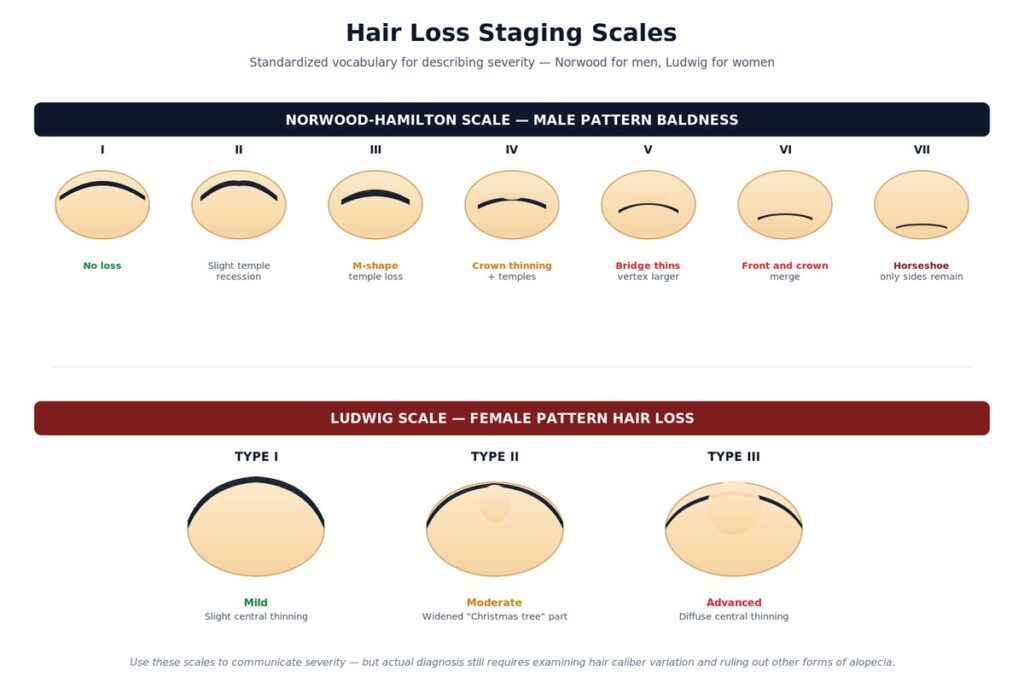
- The Norwood scale (for men) and the Ludwig scale (for women) are the standard staging systems. They’re not diagnostic on their own but they let you communicate severity in a common vocabulary.
If anything about your loss seems atypical – especially if it’s patchy, painful, itchy, or accompanied by skin changes – see a dermatologist before starting any treatment.
What this biology means for treatment strategy
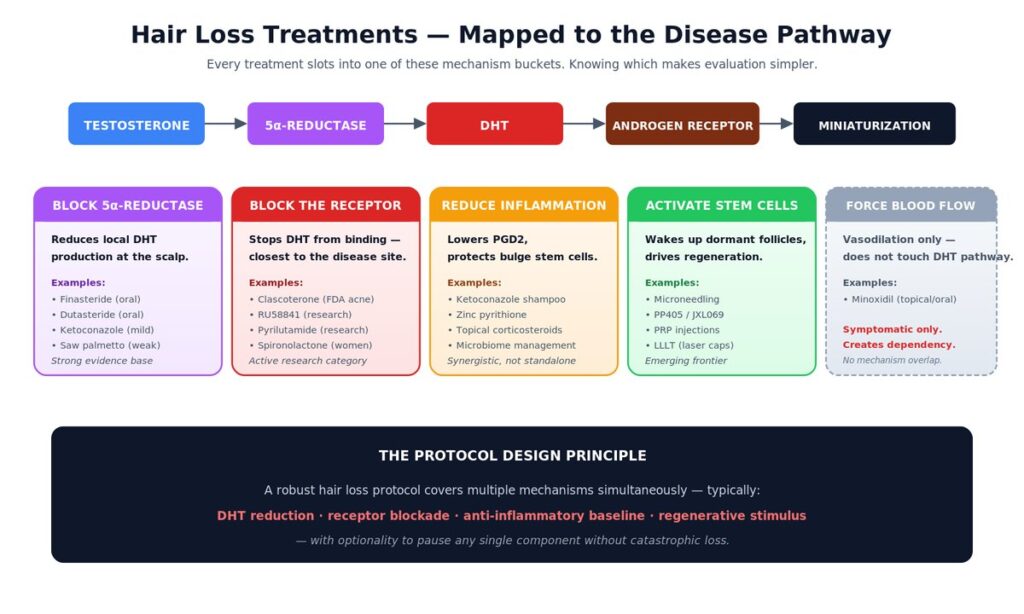
Once you understand the mechanism, every treatment slots into a specific point on the pathway. That makes it easier to evaluate any product or protocol against the question: does this address the disease, or does it override the symptoms?
- Reduce circulating androgens – castration (historical), GnRH analogues (impractical for hair loss).
- Block conversion of T to DHT – finasteride (5-AR Type II), dutasteride (Type I and II), saw palmetto (weak), ketoconazole topical (weak local).
- Block the androgen receptor directly – RU58841, pyrilutamide, and clascoterone (CB-0301), whose Phase 3 trial I broke down separately. This is the closest mechanism to the actual disease site and one of the most active research areas.
- Reduce inflammation – ketoconazole, low-dose topical anti-inflammatories, addressing scalp microbiome.
- Activate stem cells / regenerate follicles – microneedling, PRP, low-level laser therapy, and emerging compounds like PP405-class molecules and JXL069.
- Force more blood flow to the follicle (the minoxidil approach) – addresses none of the above mechanisms; produces dependency without addressing the disease, which is why I no longer use it.
The most robust protocols combine a mechanism that reduces DHT signaling (oral or topical), a regenerative stimulus (microneedling, ideally), and an anti-inflammatory baseline (ketoconazole shampoo). That stack covers the three primary drivers of the disease while preserving optionality if any one component has to be paused.
Frequently asked questions about how hair loss works
At what age does hair loss start?
Androgenetic alopecia can begin any time from late puberty onward. About 25% of men with the genetic predisposition show signs by age 21; roughly 50% by age 50. Earlier onset typically correlates with more aggressive long-term progression.
Is hair loss reversible?
Partially. In the early stages – where follicles are miniaturized but not yet vellus and not yet surrounded by significant fibrosis – modern treatments can produce real cosmetic recovery. Once follicles have been vellus for many years and perifollicular fibrosis is established, full recovery becomes much harder. This is why early intervention has higher leverage.
Does stress cause hair loss?
Acute, severe stress can trigger telogen effluvium, a reversible diffuse shedding that appears 2-4 months after the stressor. Chronic stress can also worsen androgenetic alopecia indirectly through cortisol-mediated effects on the hair cycle. But stress alone, without genetic predisposition, does not cause male pattern baldness.
Why do men lose hair on top but keep it at the back and sides?
Follicles in different scalp regions express different levels of androgen receptors and 5-alpha reductase. Frontal and vertex follicles are highly androgen-sensitive; occipital (back of the head) follicles are largely androgen-resistant. This is also the biological basis for hair transplantation – donor follicles taken from the back of the scalp retain their androgen-resistance even when moved to the top of the head.
Is washing your hair every day bad for hair loss?
No. The hairs you see in the shower are hairs that were already in exogen – washing didn’t cause them to shed, it just dislodged them slightly earlier than gravity would have. Frequent washing with a non-irritating shampoo (and ideally with periodic ketoconazole rotation if you have AGA) is associated with better, not worse, hair outcomes.
Can hats cause hair loss?
Normal hat use does not cause androgenetic alopecia. Extremely tight, persistent mechanical pressure can contribute to traction alopecia, but a normal cap or beanie is not pulling hard enough to damage follicles.
What’s the earliest sign of male pattern baldness?
Usually subtle thinning at the temples or a slight increase in shedding accompanied by hairs of visibly varied thickness on the same scalp area. The crown can also begin thinning before any hairline change is obvious – taking a phone photo of the back of your own head every six months is a good early-detection habit.
How many hairs is normal to lose per day?
50 to 150 per day. Counts that are persistently above that range, especially with a recent triggering event, point toward telogen effluvium. Counts in the normal range plus visible thinning over months to years point toward androgenetic alopecia.
Bringing it together
Hair loss feels chaotic when you’re losing hair. The biology is anything but. Androgenetic alopecia is a hormonal disease in genetically susceptible follicles. DHT, produced locally from testosterone by 5-alpha reductase, binds androgen receptors in the dermal papilla and progressively shortens the growth cycle of each affected follicle. Over many cycles, the follicle miniaturizes from a thick terminal hair to a vellus hair too small to see. Inflammation and perifollicular fibrosis accumulate over the same period, eventually making the loss harder to reverse. Other forms of hair loss – telogen effluvium, alopecia areata, traction, scarring, anagen effluvium – operate by different mechanisms and require different treatments.
The single most useful thing you can do with this information is to use it as a filter when evaluating treatments. If a product or protocol does not act somewhere on the pathway above – reducing androgens, blocking 5-alpha reductase, blocking the androgen receptor, reducing inflammation, or activating stem cells / regeneration – then it is not addressing the disease. It may be doing something useful at the symptomatic level, but it is not treating the underlying mechanism.
If you want to see how this framework translates into a real protocol, the next read is my breakdown of why I no longer use minoxidil – which approaches the same problem from the treatment-evaluation side rather than the biology side. Together they cover both halves of an evidence-based approach to hair loss: understand the disease, then match the protocol to the disease.
Disclaimer: This article is for educational and informational purposes only. It is not medical advice. Hair loss can have serious medical causes that require professional evaluation, and treatment decisions should be made with a qualified clinician. Studies and clinical reviews referenced include Imperato-McGinley et al., Hamilton (1942), Garza et al. (2011, 2012), Heilmann-Heimbach et al. (2017), Mahe et al., and Pierard-Franchimont et al. (1998), among others. Specific compounds discussed (RU58841, pyrilutamide, JXL069, PP405) are research compounds and not FDA-approved for hair loss. (c) Philippe Boissard – philippeb.pro
About the author
Philippe Boissard
Author of Men’s Hairloss Protocol (2020), Better, Smarter, Stronger (2023), and Multi-Axis Body (2025). Researches and writes about hair loss and male physiology, citing primary literature and disclosing affiliate relationships in full. Not a medical doctor; all content is educational. More about Philippe.
Get my free hair-loss protocol
The exact evidence-based routine I actually use and recommend: what works, in what order, with no hype. Enter your email on the next page and I’ll send it straight to you.
Send me the free protocol →
Very interesting
[…] I write almost entirely about androgenetic alopecia, so let me be clear at the top: alopecia areata is a different disease. Not a variant, not a subtype. Different mechanism, different course, different treatment, and a completely different prognosis. If you’ve come here because your hair is receding at the temples, this article isn’t about you, and I have written elsewhere about how pattern hair loss actually works. […]