The Importance of Third-Party Laboratory Testing

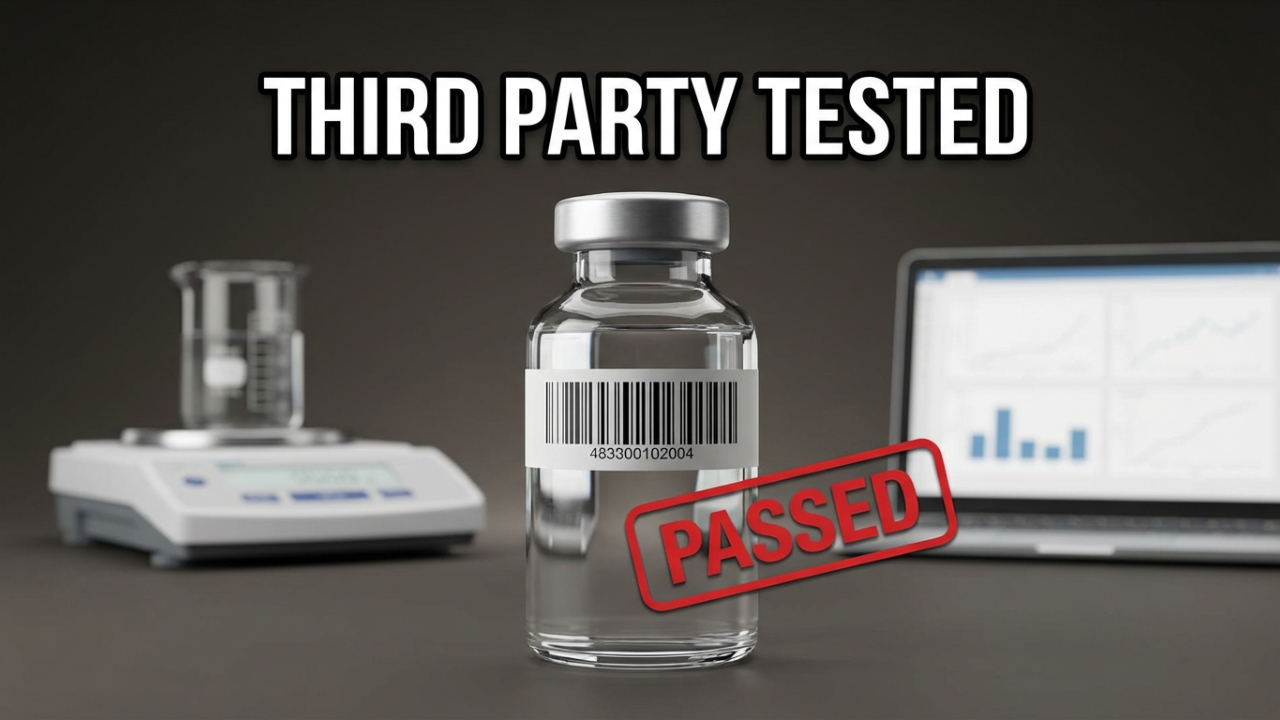
Why independent verification matters, and why I work with Anagen Inc.
When people talk about product quality, they usually mean intent: good sourcing, careful handling, reputable branding. In reality, none of that answers the most important question—what is actually in the product.
That gap between intention and verification is why third-party laboratory testing matters. It is the difference between a claim and a measurement.
Independent testing is not a marketing feature. It is a quality control mechanism that exists precisely because manufacturers, distributors, and end users all benefit from objective verification.
What independent testing verifies—and why that matters
A properly conducted third-party lab analysis confirms three things that cannot be assumed:
Identity – that the compound present is in fact the compound listed
Purity – that unwanted byproducts, solvents, or contaminants are absent or within acceptable limits
Concentration – that the stated amount matches what is actually delivered
This is not theoretical. Variability in unlabeled concentration and contamination has been repeatedly documented across multiple industries.
A widely cited analysis by Cohen et al., published in JAMA (2018) examined dietary supplements containing pharmaceutical ingredients and found that many products were mislabelled, inconsistently dosed, or contained unapproved substances. While supplements are a different regulatory category, the underlying issue is the same: without independent testing, consumers are relying on trust rather than evidence.
Similarly, the U.S. Food and Drug Administration’s enforcement reports consistently show recalls related to incorrect potency, contamination, or undeclared ingredients—issues that independent batch testing is designed to catch before products reach end users.
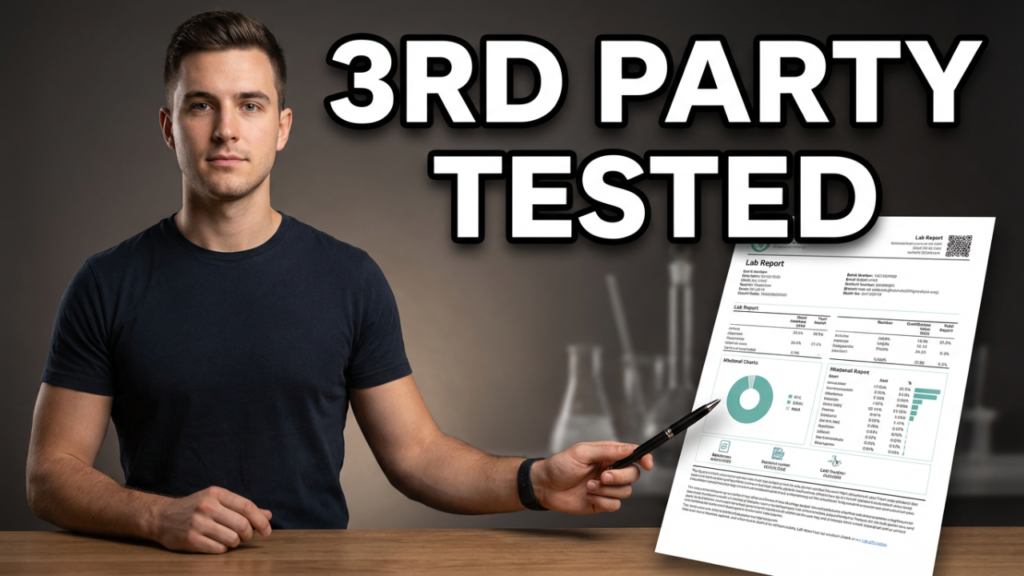
Why in-house testing is not the same thing
Internal quality checks can be useful, but they are not independent. This distinction matters.
Analytical chemistry standards such as USP <1225> (Validation of Compendial Procedures) and ICH Q2(R1) emphasize validation, reproducibility, and impartiality. Third-party labs operate under these frameworks specifically to remove conflicts of interest.
Independent labs have no incentive to adjust results, reinterpret data, or overlook deviations. Their role is measurement, not justification.
This is why in pharmaceutical development, external analytical verification is standard practice, not an optional add-on.
Why this matters for real-world outcomes
From a practical standpoint, inconsistent concentration or unknown impurities can explain why people experience:
- Variable results from identical protocols
- Unexpected side effects
- Batch-to-batch inconsistency
- Difficulty interpreting outcomes over time
Without verified inputs, downstream analysis becomes unreliable. You cannot evaluate a compound’s effects if you don’t know what you’re actually using.
This is especially relevant when discussing research compounds or products that are sensitive to degradation, storage conditions, or formulation accuracy.
Why I work with Anagen Inc.
This is the reason I choose to work with Anagen Inc..
Anagen Inc. makes third-party laboratory testing a standard requirement, not a marketing afterthought. Their products are accompanied by independent analytical reports that verify compound identity, purity, and batch-specific results.
That transparency allows for informed evaluation rather than assumption. It makes it possible to compare batches, assess consistency over time, and discuss products in a data-driven way.
From an educational and analytical standpoint, that matters.
Independent verification as a baseline, not a guarantee
Third-party testing does not make a product perfect. It does not eliminate all risk. What it does is reduce uncertainty.
That distinction is important.
In scientific and medical research, progress is built on verified inputs. The same principle applies here. Independent lab testing doesn’t promise outcomes—it provides a reliable starting point.
That is why I consider third-party verification a baseline requirement, not a premium feature, and why I choose to work with companies that treat it the same way.
Get my free hair-loss protocol
The exact evidence-based routine I actually use and recommend: what works, in what order, with no hype. Enter your email on the next page and I’ll send it straight to you.
Send me the free protocol →