
Finasteride and Hair Loss

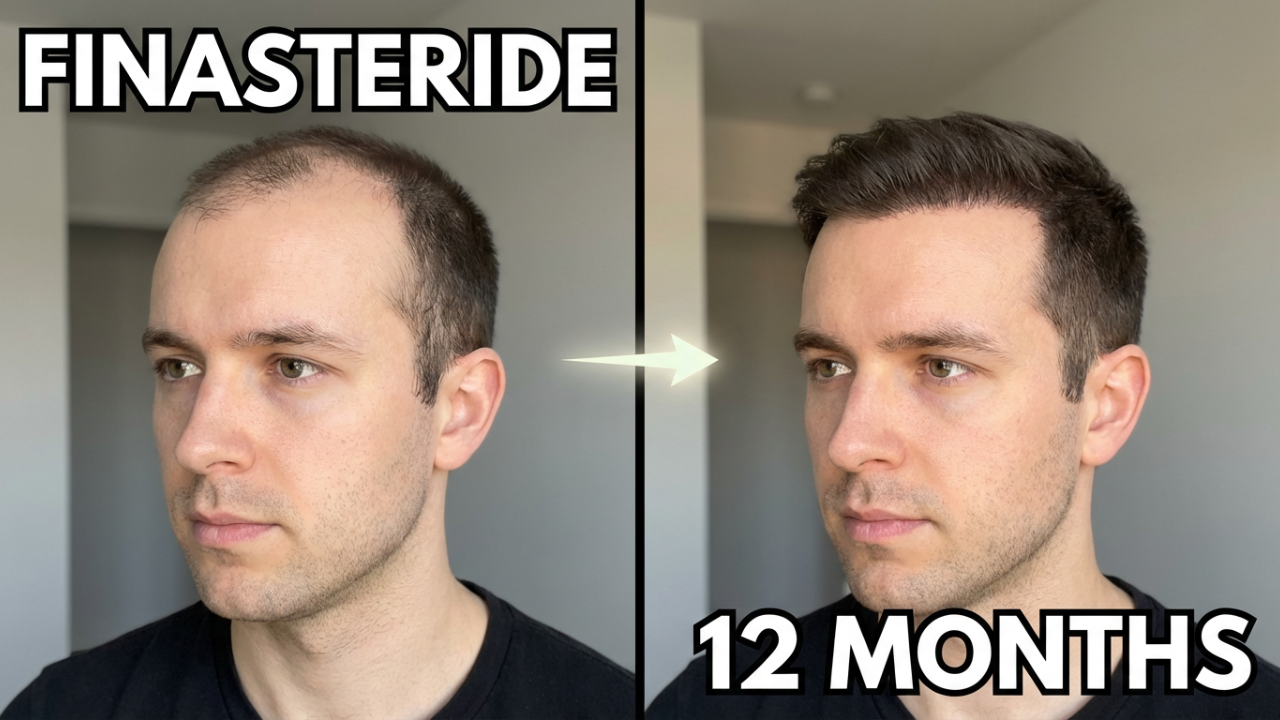
A practical, evidence-based guide to how it works and how to use it
Finasteride is one of the most studied and widely used treatments for androgenetic alopecia. Its value is not in cosmetic short-term effects, but in its ability to slow or halt the biological process that causes hair follicles to miniaturize over time.
This guide explains what finasteride does, how it works, how it is typically used, and what realistic outcomes look like when it is applied correctly and consistently.
Understanding the cause of hair loss
Male pattern hair loss is driven primarily by androgen sensitivity, not by poor circulation, scalp health, or nutrient deficiency.
At the center of this process is dihydrotestosterone (DHT).
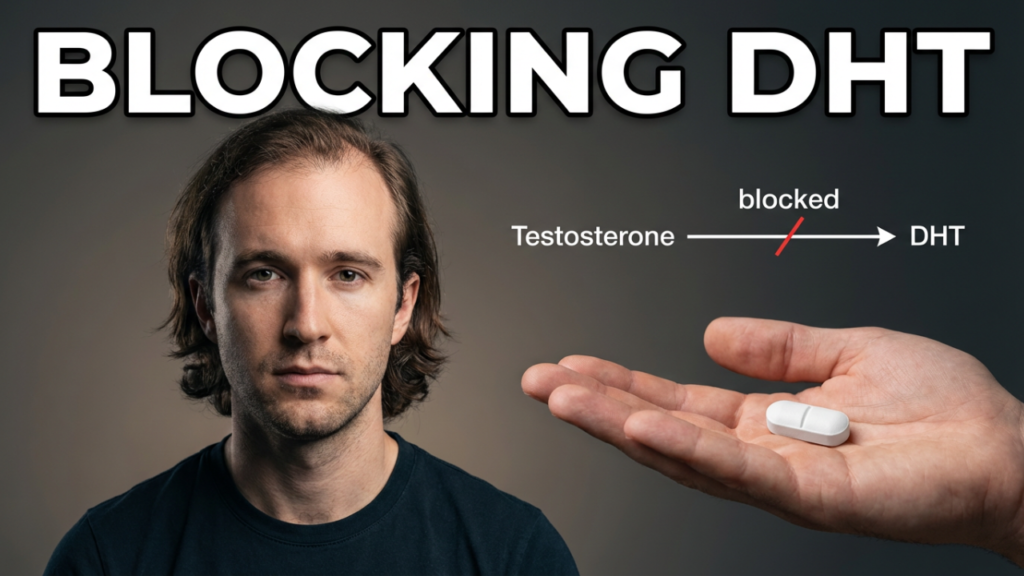
- Testosterone is converted into DHT by the enzyme 5-alpha reductase
- DHT binds strongly to androgen receptors in genetically susceptible scalp follicles
- Over time, this causes follicles to:
- Shrink (miniaturize)
- Produce thinner hairs
- Spend less time in the growth phase
- Eventually stop producing visible hair
Without intervention, this process is progressive.
What finasteride does
Finasteride works by inhibiting 5-alpha reductase (type II), the enzyme responsible for converting testosterone into DHT.
As a result:
- Serum DHT is reduced by approximately 60–70%
- Scalp DHT is significantly lowered
- Testosterone levels remain largely unchanged or slightly elevated
Finasteride does not block androgen receptors and does not eliminate testosterone. It selectively reduces the DHT signal that drives follicle miniaturization.
What finasteride can realistically achieve
Finasteride is best understood as a preservation tool, not a regrowth drug.
Expected benefits
- Slows or stops further hair loss
- Preserves existing hair follicles
- Improves hair thickness and quality over time
- Reduces shedding in many users
Limitations
- It cannot revive fully inactive follicles
- It will not recreate a juvenile hairline
- Visible improvement takes time
- Results depend on consistency and starting stage
The earlier it is introduced, the greater its long-term impact.
Oral finasteride: dosing and use
Standard dosing
- 1 mg per day, taken orally
This is the most studied and most commonly prescribed dose.
Lower-dose approaches
Some users opt for:
- 0.25–0.5 mg daily
- 1 mg every other day
These doses still suppress a large portion of DHT due to the enzyme’s sensitivity, though data is less extensive than with the standard dose.
Lower dosing is often used by individuals aiming to reduce systemic exposure while maintaining efficacy.
Topical finasteride
Topical formulations are designed to reduce DHT locally in the scalp while limiting systemic absorption.
Important considerations:
- Some systemic absorption still occurs
- Effectiveness depends heavily on formulation and application consistency
- Data is growing but less comprehensive than oral use
Topical finasteride may be an option for those who cannot tolerate oral administration, but it is not a guaranteed way to avoid systemic effects.
Timeline: what results look like over time
Finasteride works slowly and cumulatively.
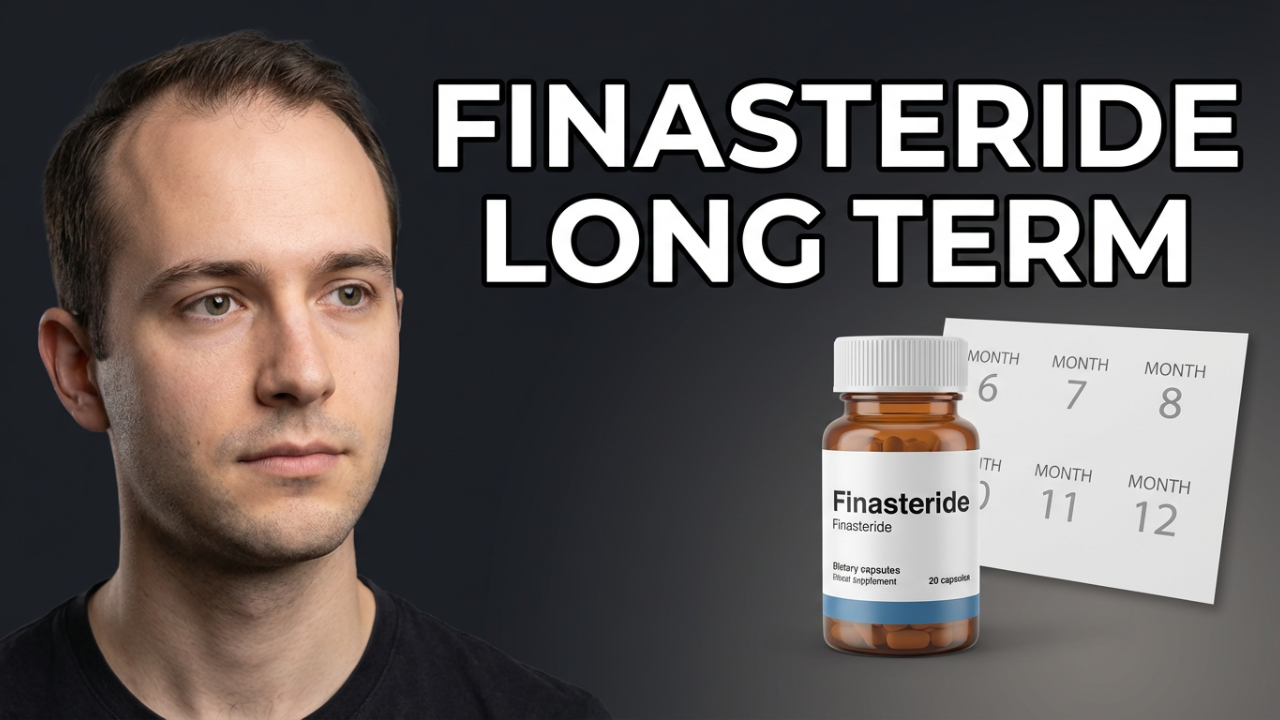
- 0–3 months: no visible change, possible shedding
- 3–6 months: reduced shedding, early stabilization
- 6–12 months: improved hair thickness and density
- 12+ months: maintenance of results
Discontinuation usually leads to loss of preserved hair within several months.
Side effects: context and perspective
Reported side effects include:
- Changes in libido
- Erectile dysfunction
- Changes in ejaculate volume
- Mood-related symptoms in a small subset of users
Key points:
- Most users do not experience noticeable side effects
- Many side effects resolve after discontinuation
- Psychological expectation can influence symptom perception
- Individual response varies
Finasteride should be approached with informed consent, not fear or dismissal.
Combining finasteride with other treatments
Finasteride is often used as a foundation therapy, combined with:
- Minoxidil (topical or oral) for growth stimulation
- Microneedling to enhance follicular signaling
- Adjunctive scalp or lifestyle interventions
Finasteride addresses the hormonal driver; other treatments address growth signaling and follicle activity.
Who finasteride is best suited for
- Men with early to moderate androgenetic alopecia
- Those seeking long-term preservation
- Individuals considering or maintaining hair transplants
- People willing to commit to consistent, ongoing treatment
Final perspective
Finasteride works because it targets the primary biological mechanism behind male pattern hair loss.
It is not fast, dramatic, or cosmetic in the short term—but it is effective when used correctly and consistently.
For most people, the decision is not whether finasteride works, but whether long-term hormonal intervention aligns with their personal risk tolerance and goals.
Get my free hair-loss protocol
The exact evidence-based routine I actually use and recommend: what works, in what order, with no hype. Enter your email on the next page and I’ll send it straight to you.
Send me the free protocol →