
RU58841 and Hair Loss: Mechanism, Use, and Practical Considerations

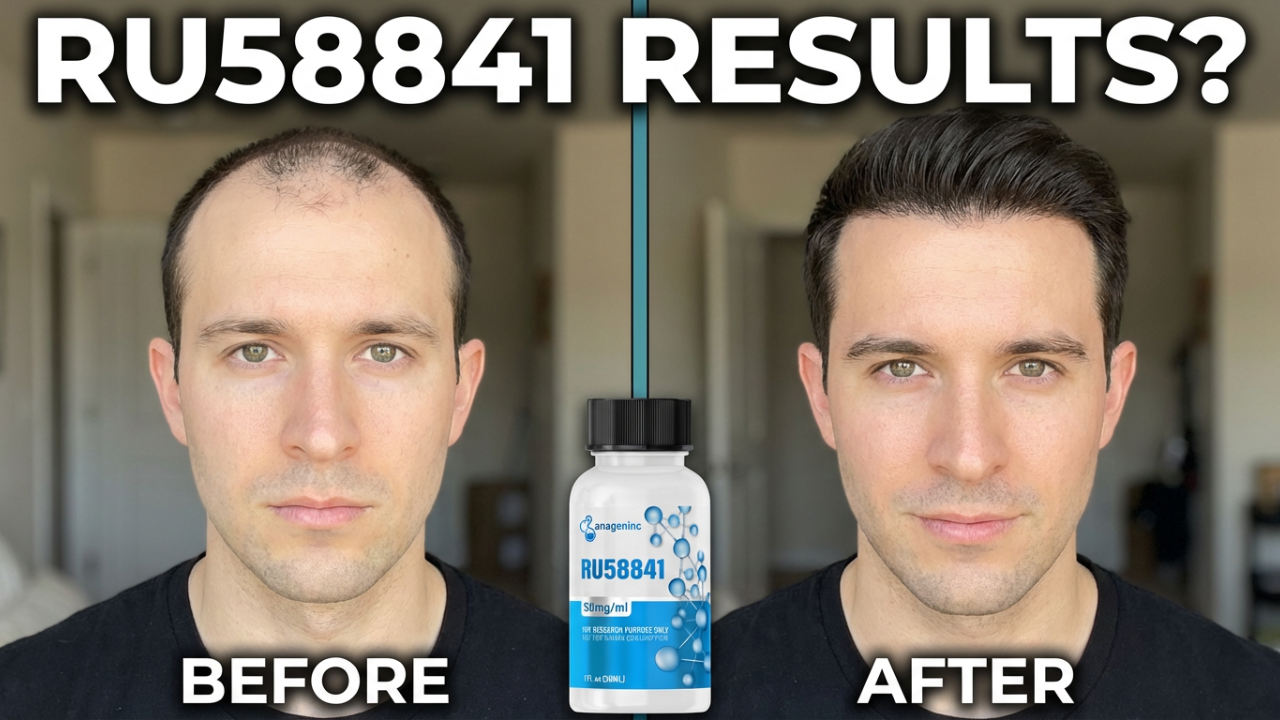
RU58841 is a non-steroidal topical anti-androgen that has gained attention for its ability to block androgen activity at the hair follicle level. Unlike systemic treatments, RU58841 is used locally, with the goal of reducing androgen-driven miniaturization without meaningfully altering circulating hormone levels.
This guide explains how RU58841 works, where it came from, why it’s used, and how people typically apply it, based on available research and real-world use.
A Brief History of RU58841
RU58841 was developed in the 1990s as part of a broader effort to create localized anti-androgens. Early research showed that it could effectively bind to androgen receptors in the skin and hair follicles, preventing stronger androgens—such as dihydrotestosterone (DHT)—from exerting their effects.
While development for commercial pharmaceutical use was discontinued, RU58841 continued to be studied and later adopted by researchers and individuals interested in topical androgen suppression.
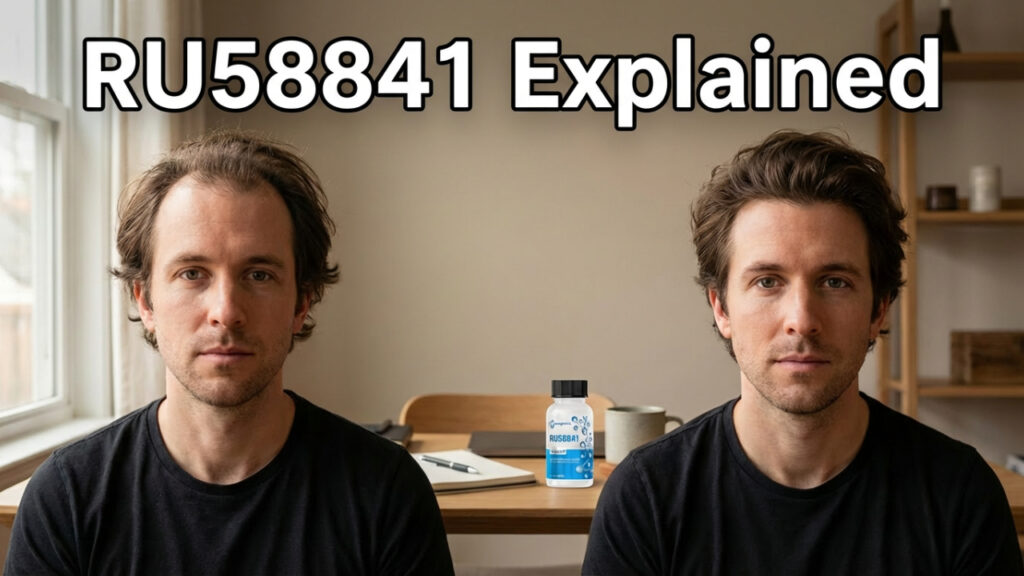
How RU58841 Works
Hair loss in androgenetic alopecia is driven primarily by androgens binding to receptors in genetically sensitive follicles. RU58841 works by:
- Competitively binding to androgen receptors in the scalp
- Blocking DHT and testosterone from activating those receptors
- Reducing miniaturization signals within susceptible follicles
Importantly, RU58841 does not reduce androgen production. Its action is receptor-level and localized, which is why it’s often discussed as an alternative or complement to systemic therapies.
Why People Use RU58841
People typically consider RU58841 for one or more of the following reasons:
- Desire for localized androgen control
- Intolerance or limited response to systemic treatments
- Interest in maximal scalp-level protection
- Use as part of a multi-mechanism hair loss strategy
Because RU58841 targets the androgen receptor directly at the follicle, many view it as one of the most potent topical anti-androgens available.

Application: How RU58841 Is Commonly Used
RU58841 is typically applied topically to the scalp. Common real-world practices include:
- Applying once daily to thinning or high-risk areas
- Using it on a clean, dry scalp
- Allowing sufficient contact time before washing
Because RU58841 acts locally, consistency matters. Its effectiveness depends on regular receptor coverage during periods of androgen exposure.
Benefits and Limitations
Potential benefits
- Direct androgen receptor blockade at the follicle
- No suppression of systemic androgen production
- Can be combined with other hair-loss approaches
Important limitations
- Not an FDA-approved medication
- Long-term large-scale human data is limited
- Results depend on formulation quality, consistency, and individual biology
For these reasons, RU58841 is best understood as a research-based tool, not a guaranteed solution.
Sourcing and Transparency
Quality and formulation matter with compounds like RU58841. Some suppliers focus on verified purity, stability, and proper handling, which can significantly affect outcomes.
I work with Anagen Inc., a company known for research-grade compounds and transparent documentation.
If you choose to explore RU58841 through them, you can use the code BLUEPRINT for 10% off.
As always, any affiliate relationship is disclosed openly, and recommendations are based on experience and evaluation—not promotion for its own sake.
Final Thoughts
RU58841 represents a mechanism-focused approach to hair loss: stop androgen signaling at the follicle, locally, and directly. It’s not a shortcut or a guarantee, but for some, it becomes a meaningful part of a long-term strategy when used thoughtfully and consistently.
If you want deeper breakdowns, comparisons, or integration strategies with other approaches, those are covered elsewhere on the site.
Get my free hair-loss protocol
The exact evidence-based routine I actually use and recommend: what works, in what order, with no hype. Enter your email on the next page and I’ll send it straight to you.
Send me the free protocol →
[…] mechanism does not care whether the androgen arrived pre-reduced. I have written in detail about how RU58841 works and where its evidence actually stands, and about the clinical data on pyrilutamide. Both articles are blunt about the fact that the human […]